
Uncategorized
Marble Look Countertops That Work Harder
Compare marble look countertops for kitchens, baths, and entertaining spaces, with practical guidance on material, movement, care, and project planning.
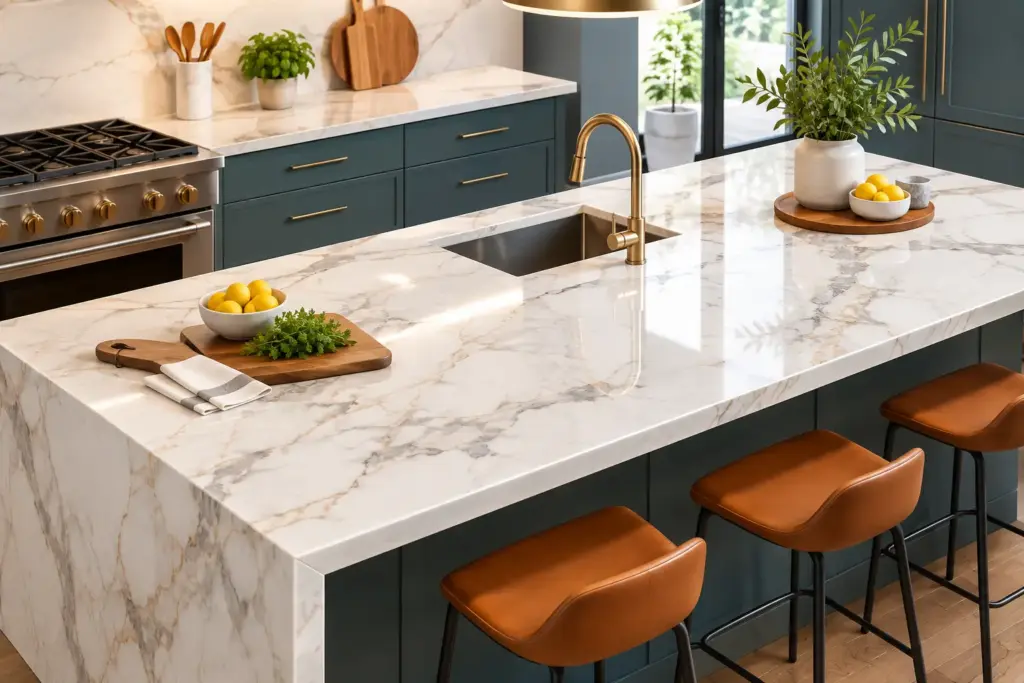
A marble-inspired island can set the entire direction of a kitchen. The soft white ground, decisive veining, and sense of depth bring an immediate architectural finish that cabinetry alone cannot achieve. Marble look countertops offer that visual drama while giving homeowners, designers, and builders more ways to balance daily performance, budget, and project requirements.
The most successful choice is not simply the whitest slab or the boldest vein. It is the surface whose movement suits the room, whose finish suits the way it will be used, and whose availability supports the construction schedule. For a family kitchen, a refined apartment fit-out, or a hospitality space with constant traffic, those details shape whether the finished room feels considered for years rather than merely impressive on installation day.
Why Marble Look Countertops Have Lasting Appeal
Authentic marble has an unmistakable beauty. Its veining is created by geology, not repetition, and every slab carries its own variations in tone, mineral detail, and movement. That character is precisely why marble remains a reference point in luxury interiors.
Yet a marble look can be interpreted in several ways. Engineered surfaces can offer controlled color and consistent veining with a lower-maintenance profile than many natural marbles. Porcelain and sintered surfaces can create a crisp, contemporary stone aesthetic with strong resistance to heat and staining, depending on the product and installation. Natural stone alternatives may also deliver a similarly elevated, pale-veined appearance with their own distinctive material qualities.
This gives a project more freedom. A homeowner may want the elegance of Calacatta-inspired veining without building a maintenance routine around etching. A designer may need multiple slabs with a predictable visual language across kitchens, bathrooms, and joinery. A builder may need a material that can be selected, inspected, fabricated, and supplied with clear timing. Marble look surfaces answer different versions of the same design brief: create visual impact, then make it workable.
Start With the Vein, Not the Product Name
Terms such as Calacatta, Statuario, and Carrara are useful starting points, but they do not tell the whole story. The slab itself should lead the decision. Look at the background tone first. A cool white surface can sharpen black accents and chrome, while a warmer ivory base sits naturally beside oak, brass, bronze, and creamy painted cabinetry.
Then consider the scale of the veining. Fine gray threading can read as quiet and tailored, especially in compact kitchens or bathrooms. Broader charcoal, taupe, or gold movement creates a more expressive statement, best suited to a generous island, wall cladding, or uninterrupted run of countertop. A bold slab can be spectacular, but it needs enough visual space to breathe.
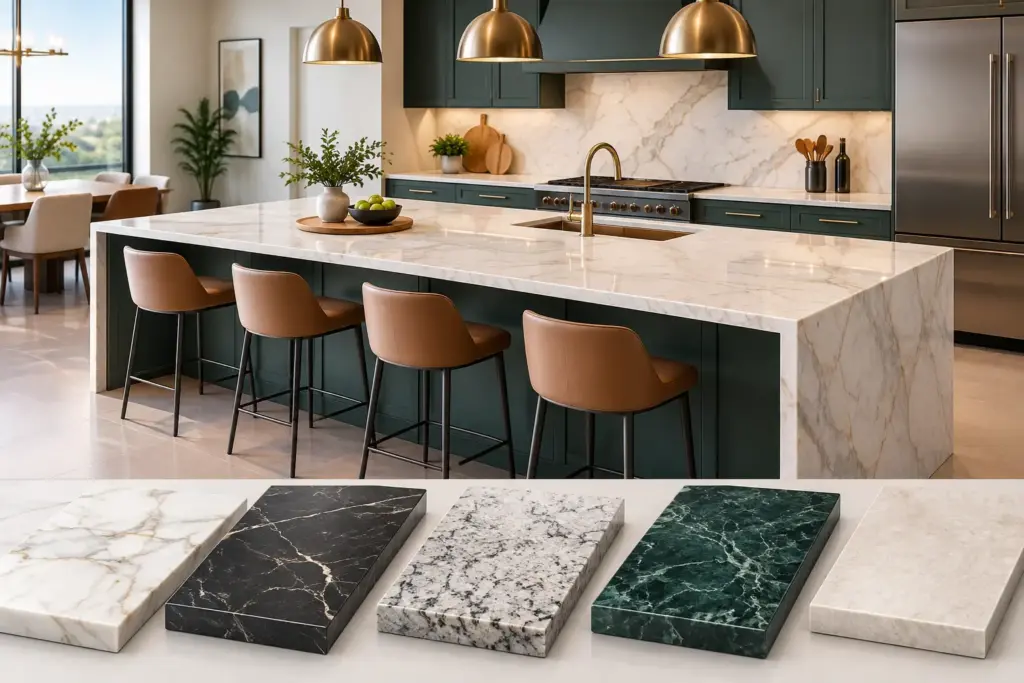
Collections such as Polar Calacatta, Santorini Gold, Royal Gold, Bianco Seta, and Statuario Oro illustrate how different the marble-look category can feel. Some favor cool, clean movement; others introduce warm gold veining that brings softness and richness to a room. The choice should respond to the fixed elements already in the project, including flooring, timber undertones, metal finishes, paint, and natural light.
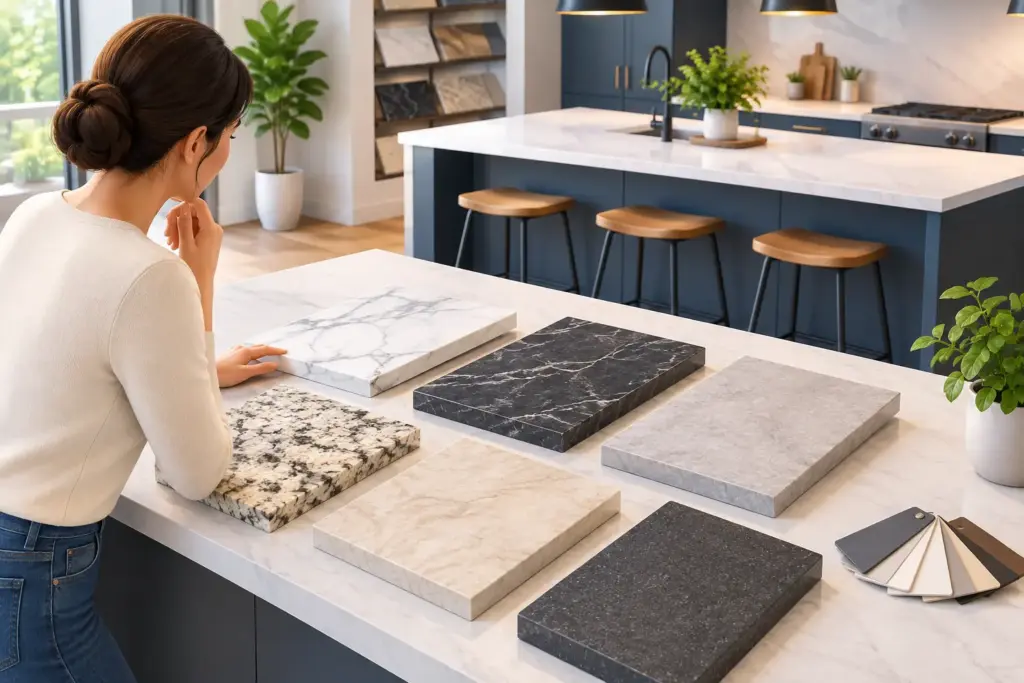
A physical sample is valuable, but it is not a substitute for viewing the full slab. Samples reveal texture and color direction. Full slabs reveal vein placement, tonal shifts, and the scale of the movement that will appear across an island or backsplash. For bookmatched applications, waterfall ends, or large commercial reception counters, slab layout should be discussed before fabrication begins.
Choosing the Right Material for the Room
There is no single best material for every marble-inspired design. The right decision depends on where the surface will sit and how the space will be used.
Engineered stone for considered everyday living
Premium engineered stone is often selected for kitchens and bathrooms where a composed appearance and practical care are both priorities. It can provide a consistent marble look, making it particularly useful when several countertop sections need to read as one coordinated design. It is also well suited to clients who want an elegant surface without the natural porosity and variation associated with marble.
Performance still depends on correct use. Hot cookware should not be placed directly on any countertop without checking the manufacturer guidance, and cutting should always be done on a board rather than the surface itself. Professional fabrication and installation matter as much as the slab selection, especially around cutouts, joins, and overhangs.
For projects prioritizing safer material specifications, silica-free engineered stone options deserve specific attention. Availability, fabrication requirements, and local compliance should be confirmed at the outset, particularly for trade teams managing residential and commercial installations.
Natural stone for one-of-one character
Natural stone brings depth that cannot be standardized. Its mineral variation, subtle shifts in color, and changing response to light give a kitchen or bathroom a distinctly individual presence. For clients who value originality above uniformity, that is often the point.
The trade-off is care. Many natural stones benefit from sealing and thoughtful maintenance, and some can mark or etch when exposed to acids or strongly colored spills. That does not make them unsuitable for kitchens. It simply means the owner should be comfortable with a surface that develops a lived-in character rather than remaining visually unchanged.
Porcelain and sintered surfaces for demanding zones
For outdoor kitchens, barbecue surrounds, fireplace features, and high-use commercial settings, porcelain or sintered surfaces can be compelling marble-look options. Their suitability for UV exposure, heat, thickness requirements, edge details, and structural support should be assessed product by product. Outdoor applications have additional considerations, including glare, drainage, cabinetry movement, and exposure to the elements.
A surface that performs beautifully indoors is not automatically the right choice for an alfresco setting. Treat the location as part of the material brief, not an afterthought.
Design Decisions That Make the Countertop Feel Intentional
Marble look countertops work best when the room does not compete with them. If the slab has confident veining, keep surrounding finishes calm enough to let the movement read. Flat-panel cabinetry, restrained hardware, and a simple painted wall can give a dramatic island the presence it deserves.
That does not mean every scheme must be minimal. Warm timber, fluted joinery, aged brass, and textured tile can sit beautifully beside marble-inspired surfaces when their undertones are aligned. The key is to repeat one or two colors from the slab rather than introduce unrelated whites, grays, and beiges.
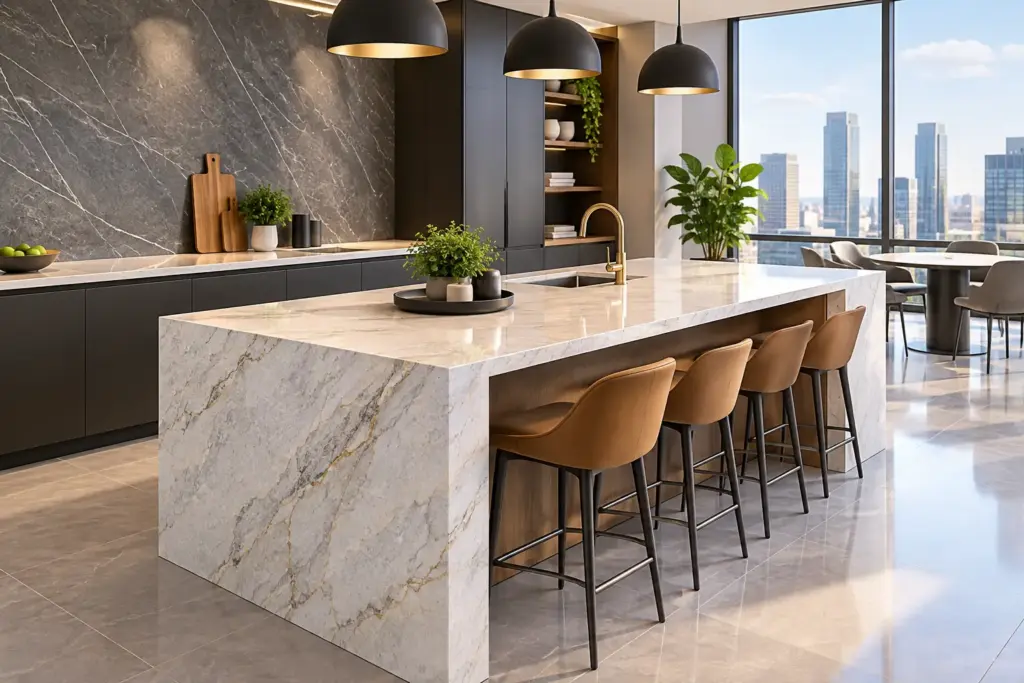
Edge profiles deserve the same attention. A slim eased edge creates a crisp, contemporary line. A thicker mitred edge gives an island greater visual weight. More detailed profiles can suit traditional or transitional interiors, though they may shift the aesthetic away from the clean, architectural look many marble-effect slabs are chosen to deliver.
Backsplashes also change the result. Continuing the countertop material up the wall creates a sculptural, high-end effect and makes the veining part of the architecture. A tiled backsplash offers contrast and can reduce slab requirements, but its grout lines introduce another visual rhythm. Neither approach is automatically better. It depends on whether the countertop is intended to be the quiet foundation or the room’s central statement.
Plan Early for Better Results
A premium surface should be selected early enough to influence the rest of the design. Cabinet color, appliance placement, sink configuration, tapware, and lighting all affect how a slab will look once installed. Waiting until cabinetry is finalized can limit the best material and layout choices.
For larger projects, request clear information on slab dimensions, batch consistency, lead times, and the number of slabs required. A wide island with waterfall ends may use material very differently from a straight countertop run. The same applies to a bookmatched wall, where cutting plans need to protect the intended vein alignment.
At Avila Stones, slab-level selection and project guidance help turn an initial inspiration image into a material decision grounded in the actual space. That process is especially useful when coordinating multiple rooms, comparing natural variation with engineered consistency, or specifying a silica-free alternative.
Care That Preserves the Finish
Most marble look countertops benefit from simple, regular care rather than aggressive cleaning. Use a soft cloth, warm water, and a pH-neutral cleaner appropriate to the surface. Wipe spills promptly, particularly oils, wine, coffee, and acidic foods. Avoid abrasive pads, harsh chemicals, and products that leave residue.
For natural stone, follow the recommended sealing and maintenance guidance for that specific material. For engineered, porcelain, or sintered surfaces, check the supplier’s care instructions rather than assuming all stone-look products perform identically. The right routine is usually uncomplicated, but it should be based on the actual slab, not its appearance.
The most persuasive marble-inspired interiors are not defined by imitation. They are defined by proportion, material intelligence, and a slab chosen with the room in mind. Take time to see the full surface in person, place it beside the finishes that will surround it, and let the veining guide the design rather than merely decorate it.
Ready to Choose Your Stone?
Our team can walk you through every silica-free and natural option in the range.