
Uncategorized
Stone Countertop Cost: What Shapes Your Quote
Understand stone countertop cost: slab selection, fabrication, edge details, installation, and the choices that shape a lasting design investment at home
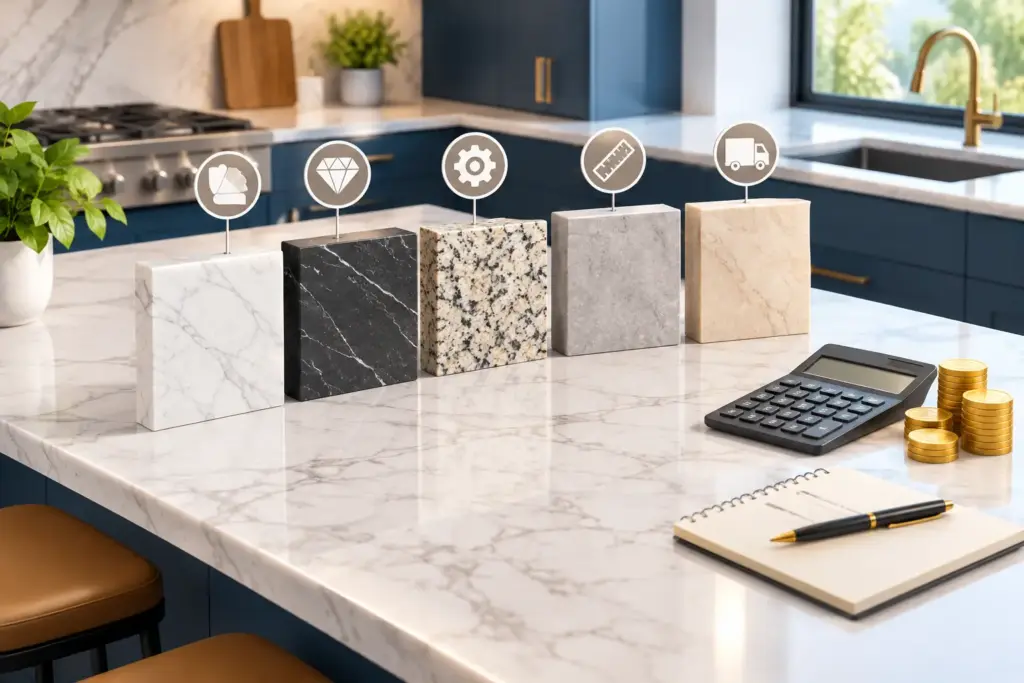
A statement island can carry an entire kitchen – but the slab itself is only one part of the investment. Stone countertop cost is shaped by the visual character you choose, the scale of the design, and the precision required to turn a raw slab into a finished architectural surface. A clean, pale engineered stone with restrained veining may suit a calm contemporary interior; a dramatic natural slab can become the room’s defining feature. Each calls for a different approach to selection, fabrication, and budgeting.
For a reliable figure, think beyond price per square foot. A considered quote should account for the exact material, usable slab area, edge profile, cutouts, site access, and installation requirements. That detail protects the design intent and helps prevent costly changes once fabrication has begun.
What Determines Stone Countertop Cost?
The first question is not simply, “What does the stone cost?” It is, “What will this surface need to do, and how prominent will it be?” A hardworking family kitchen, a sculptural waterfall island, a refined powder room vanity, and an outdoor entertaining counter place different demands on material and workmanship.
Material type and visual rarity
Natural stone is formed over time, so no two slabs are identical. Movement, mineral variation, veining, and tonal shifts are part of its appeal. Premium natural stones can command more because of quarry origin, limited availability, transport, and the care needed to reserve matching material for a project. When the brief calls for continuous veins across an island and backsplash, additional slab allocation may be needed to achieve the desired result.
Engineered stone offers a more controlled visual language, often with greater consistency from slab to slab. This can be especially valuable on larger projects, multi-unit developments, or interiors where repeatability matters. Designs with luminous white grounds, fine marble-inspired veining, or rich dark bases can deliver high visual impact without relying on the unpredictable variation of natural material.
The appropriate choice depends on the project. Natural stone rewards clients who value individuality and are comfortable with variation. Engineered surfaces appeal to those seeking dependable color, considered pattern, and lower-maintenance performance. Where safety and specification are central to the brief, a silica-free stone option may also influence material selection and cost.
Slab size, yield, and layout
Countertops are priced from slabs, not just from the visible finished surface. Fabricators must allow for cutting, positioning veins, avoiding unsuitable areas, and creating clean joins. A compact counter may still require a full slab, while a large island with long returns may need more than one.
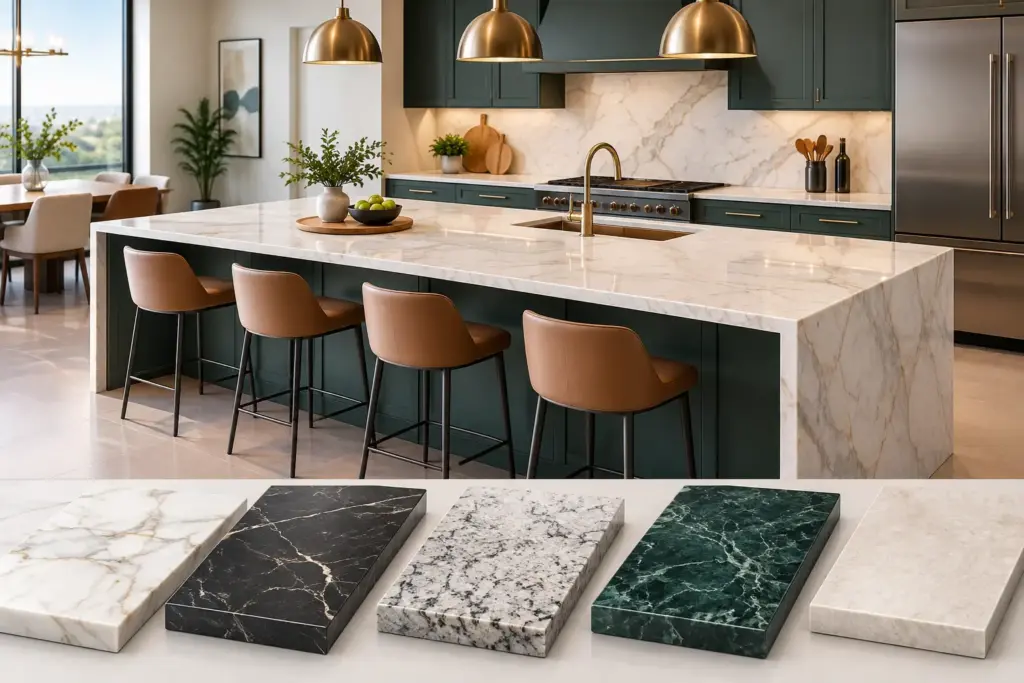
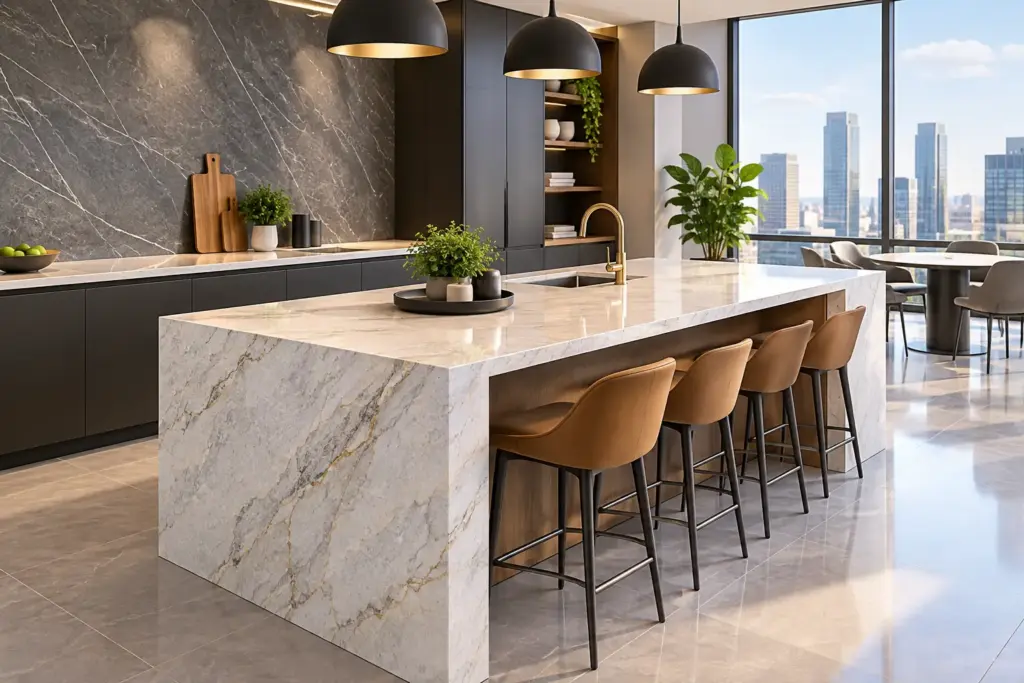
Yield becomes particularly important when a design includes a waterfall end, full-height backsplash, integrated shelving, or a matching butler’s pantry. A simple rectangular layout uses material efficiently. A curved island, L-shaped kitchen, or heavily detailed vanity creates more offcuts and requires more fabrication time. That does not make a complex design a poor decision – it simply means it should be priced as a composed architectural feature rather than a basic countertop.
Thickness and edge treatment
A standard polished edge is usually the most economical finish. Costs rise as the design becomes more tailored: mitred edges that create the appearance of a thicker slab, waterfall panels, layered profiles, curved edges, fluting, or carefully bookmatched pieces all require skilled labor and more material planning.
Thickness also changes the look and the quote. A thinner profile can feel crisp and contemporary, while a substantial mitred edge gives an island visual weight. Neither is inherently better. The right decision depends on cabinetry proportions, appliance scale, and whether the countertop is intended to quietly support the room or take center stage.
Cutouts and integrated details
Every opening needs to be measured, cut, and finished accurately. Cooktop, sink, faucet, soap dispenser, pop-up power point, and drainage-groove details can all affect the final price. Undermount sinks demand a refined internal finish because the stone edge remains visible. Integrated stone sinks and drainboards require even more planning and fabrication expertise.
A quote should clearly distinguish between the stone supply, fabrication, installation, and any extras. This is particularly useful when comparing proposals. A lower initial number may exclude sink cutouts, templating, delivery, seam work, or removal of existing surfaces.
Why Fabrication Is a Major Part of the Investment
A beautiful slab only performs as well as the team that measures, cuts, finishes, and installs it. Fabrication is where a selected surface becomes a precise countertop, with seams placed thoughtfully, edges aligned, and veins directed to complement the room.
Templating is essential. Cabinets must be installed and level before final measurements are taken, especially for walls that are not perfectly straight or islands with custom curves. Rushing this stage can result in uneven overhangs, awkward gaps, or delays. On premium projects, taking the time to inspect slabs and confirm the layout before cutting is one of the most valuable safeguards available.
Installation conditions matter, too. Stairs, tight access, upper-level apartments, large-format pieces, and unsupported overhangs may require additional labor, equipment, or structural preparation. A long island may be fabricated in sections and joined on site. The goal is not merely to make the pieces fit, but to preserve the visual flow of the material.
Budgeting for a Stone Countertop Without Compromising the Design
The strongest budgets establish priorities early. If a dramatic island is the centerpiece, it may be worth allocating more of the material budget there while specifying a simpler, complementary surface for a pantry or secondary workspace. If continuity is the priority, choose a slab pattern that can carry across counters and splashbacks without excessive waste.
There are several practical ways to maintain a refined result:
- Select a straightforward edge profile and invest instead in a standout slab.
- Use a full-height backsplash selectively behind the range or in a focal zone rather than around every wall.
- Keep sink and cooktop positions considered but simple, avoiding unnecessary cutouts.
- Review slab layouts before fabrication to understand joins, vein direction, and material yield.
These decisions are not about reducing quality. They are about placing investment where it will be most visible and most enduring. A well-chosen surface with clean fabrication often feels more luxurious than an overcomplicated design with compromised proportions.
Comparing Quotes With Confidence
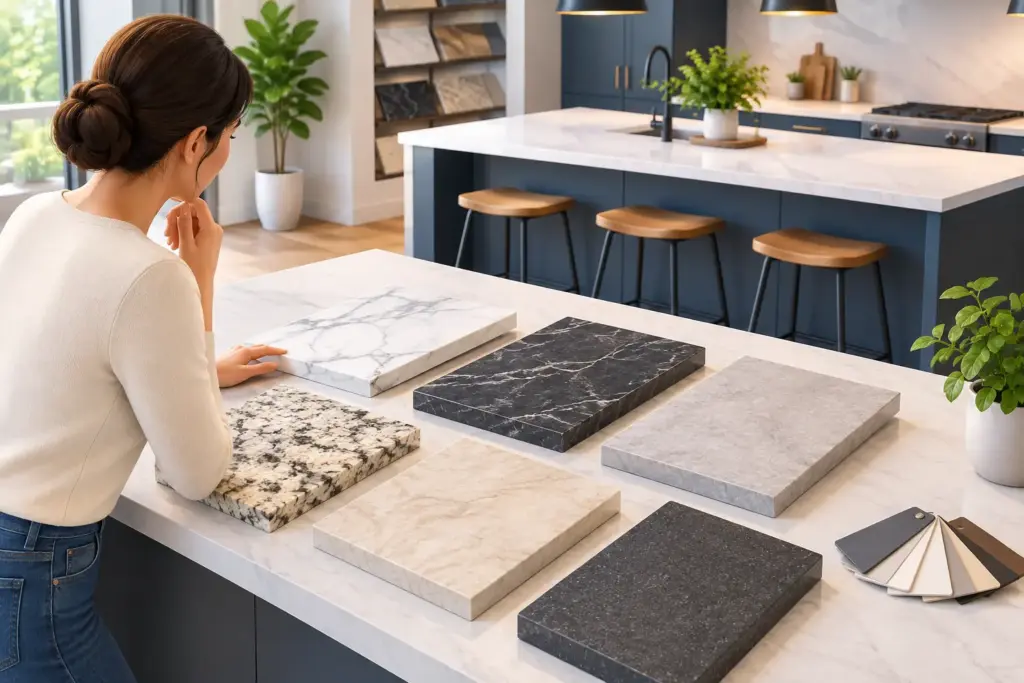
When reviewing stone countertop cost, ask each supplier or fabricator whether the quote is based on a specific slab or an allowance. An allowance can be useful at the early planning stage, but it is not the same as reserving the exact material you have seen. Natural slabs, in particular, should be viewed in person where possible so you can assess movement, color depth, and any natural features that will appear in the finished surface.
Confirm the slab thickness, number of slabs, edge profile, cutouts, backsplash allowance, installation, delivery, and applicable taxes. Also ask how seams will be positioned and whether the stone will be inspected before fabrication. For trade professionals, clarity on availability and lead times is equally important. A surface specified for a multi-stage build must be available when cabinetry and installation schedules are ready.
Premium sourcing and slab-level quality control bring confidence to this process. At Avila Stones, material selection is supported by physical samples, showroom viewing, and project-specific guidance, helping homeowners and specifiers compare visual options before committing to fabrication.
The Value Is in the Finished Space
A stone countertop is touched every day, seen from every angle, and often defines the relationship between cabinetry, lighting, and the wider interior palette. Its cost should reflect more than a square-foot calculation. It represents the material’s quality, the discipline of fabrication, and the lasting visual effect of a surface chosen for the way you live or build.
Before making a final decision, bring cabinet samples, flooring, hardware, and a clear plan to the slab selection process. The right stone will not simply match the room. It will give the room its presence.
Ready to Choose Your Stone?
Our team can walk you through every silica-free and natural option in the range.