
Uncategorized
Black Stone Countertops That Define a Room
Black stone countertops bring depth, contrast, and lasting polish to kitchens and baths. Learn how to choose the right slab, finish, and layout with care.
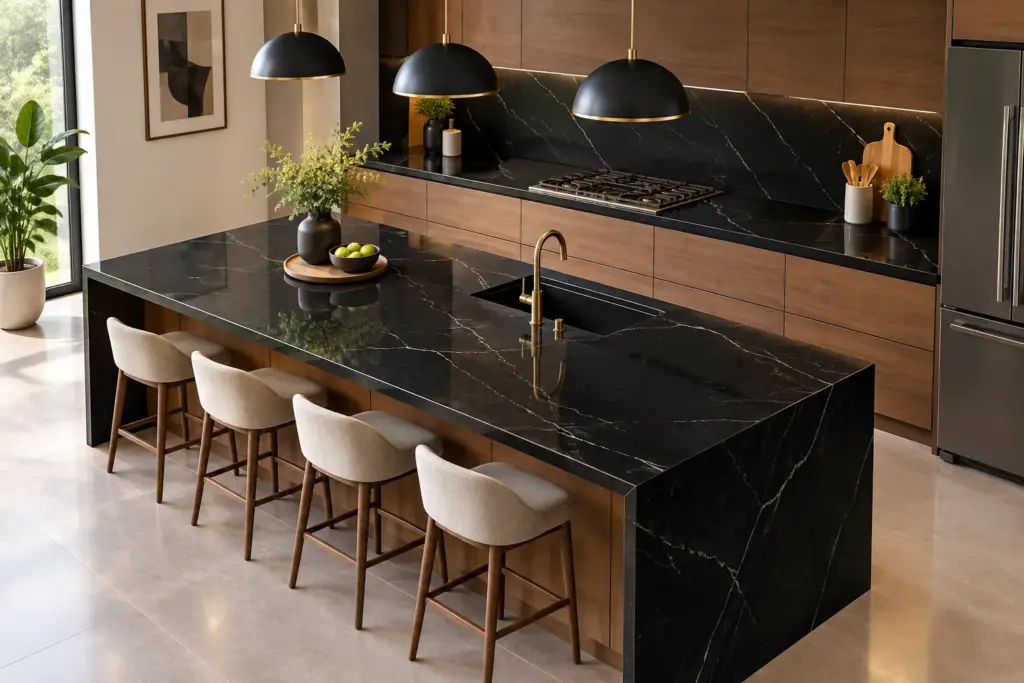
A pale kitchen can feel complete with one decisive surface: a deep black island that grounds the cabinetry, catches the light, and gives the room a clear focal point. Black stone countertops do more than create contrast. They bring visual weight, a sense of permanence, and a level of finish that works equally well in restrained contemporary interiors and richly layered homes.
The right black surface is not simply black. It may carry fine white veining, warm mineral movement, a soft charcoal undertone, or a polished reflection that changes throughout the day. Selecting it well means considering the slab as part of the entire room, not as an isolated sample.
Why Black Stone Countertops Make Such an Impact
Black has a rare ability to sharpen every material around it. Pale oak appears warmer beside it. Brushed brass feels richer. White cabinetry becomes cleaner and more architectural. Even simple finishes such as matte black hardware or textured tile gain greater presence when they are balanced by a dark stone surface.
This is why black stone works particularly well on a kitchen island. The island is often the largest uninterrupted plane in the room, so a dark slab gives it a sculptural quality. In an open-plan home, it can also define the kitchen without adding visual clutter or another material transition.
In bathrooms, black stone countertops create a more intimate, tailored atmosphere. Paired with timber joinery, fluted glass, or warm lighting, the result can feel like a private hotel suite rather than a purely functional room. For commercial interiors, reception counters, bar tops, and workplace kitchenettes benefit from the same sense of refinement, with the added advantage of a surface that visually holds its own in a high-traffic setting.
The trade-off is scale. A black surface can dominate a small or poorly lit room if every surrounding finish is also dark. That is not a reason to avoid it. It is a reason to consider how the stone will interact with natural light, artificial lighting, wall color, cabinet tone, and the amount of exposed slab in the final design.
Choosing the Right Black Stone Countertop
The most successful choice begins with the character of the slab. A quiet, near-solid black surface reads modern and disciplined. It suits minimal cabinetry, integrated appliances, and projects where the architecture should feel calm and precise. A black stone with distinct veining delivers a different effect: more expressive, more decorative, and often more closely connected to natural stone traditions.
Black Oro, for example, brings dark drama with warmer gold-toned movement. It can sit beautifully alongside walnut, bronze, champagne metal, or creamy textured finishes. A cooler black with crisp white or gray veining is often a natural fit for white oak, stainless steel, soft gray cabinetry, and contemporary monochrome schemes.
Natural Stone or Engineered Surface?
Natural stone offers singularity. Every slab has its own mineral pattern, shifts in tone, and visual depth. This makes it an exceptional choice for clients who want a kitchen or bathroom to feel entirely individual. It also means samples are only a starting point. The actual slab selection matters, particularly where veining needs to flow across a large island, waterfall edge, or bookmatched feature.
Engineered surfaces offer a more controlled appearance and are often preferred when consistency, lower maintenance, or repeatability across several areas is central to the brief. For multi-unit developments, hospitality settings, or projects requiring closely coordinated slabs, this can be a practical advantage. Many premium engineered options now deliver nuanced veining and depth that feel considered rather than uniform.
Material safety should also be part of the discussion. For homeowners, builders, and fabricators, silica-free stone options provide an important pathway for projects seeking elevated design with a stronger focus on worker and occupant considerations. The best material decision balances appearance, daily use, fabrication requirements, and the standards expected across the project.
Look Beyond the Small Sample
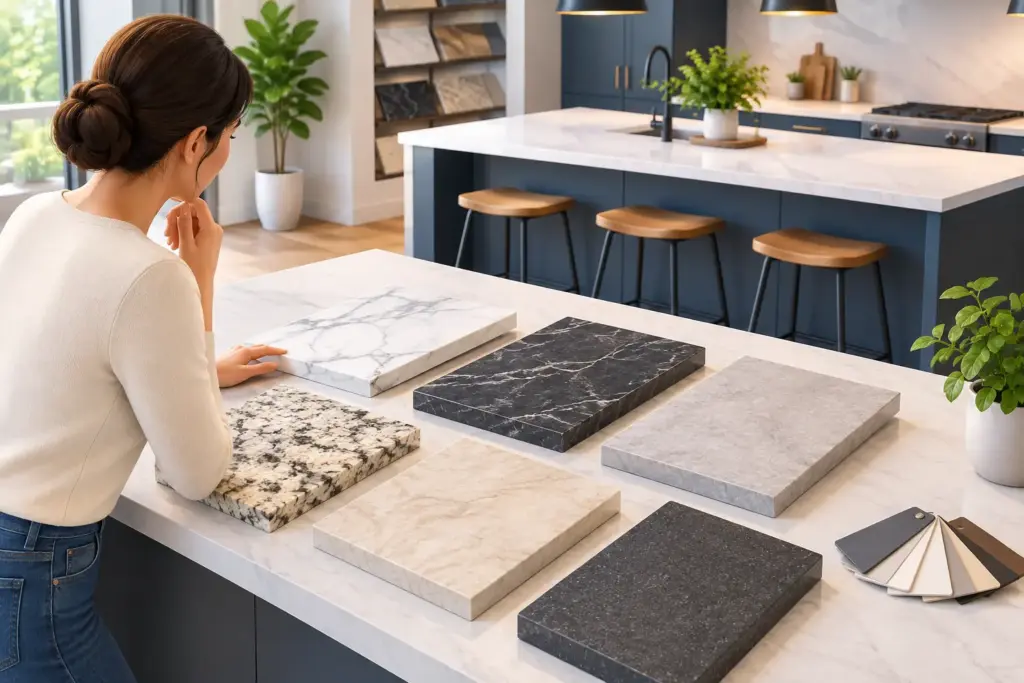
A small swatch cannot show the full personality of a black slab. Fine veins may appear subtle on a sample but become a defining feature across a long countertop. Conversely, an active sample may resolve into an elegant, balanced field once viewed across a full slab.
Whenever possible, inspect the selected slab under lighting that resembles the project. A polished black surface can reflect pendants, windows, and cabinetry, adding welcome depth in some spaces and visible reflections in others. Honed or matte finishes absorb more light and tend to feel softer, though their care requirements may differ depending on the material.
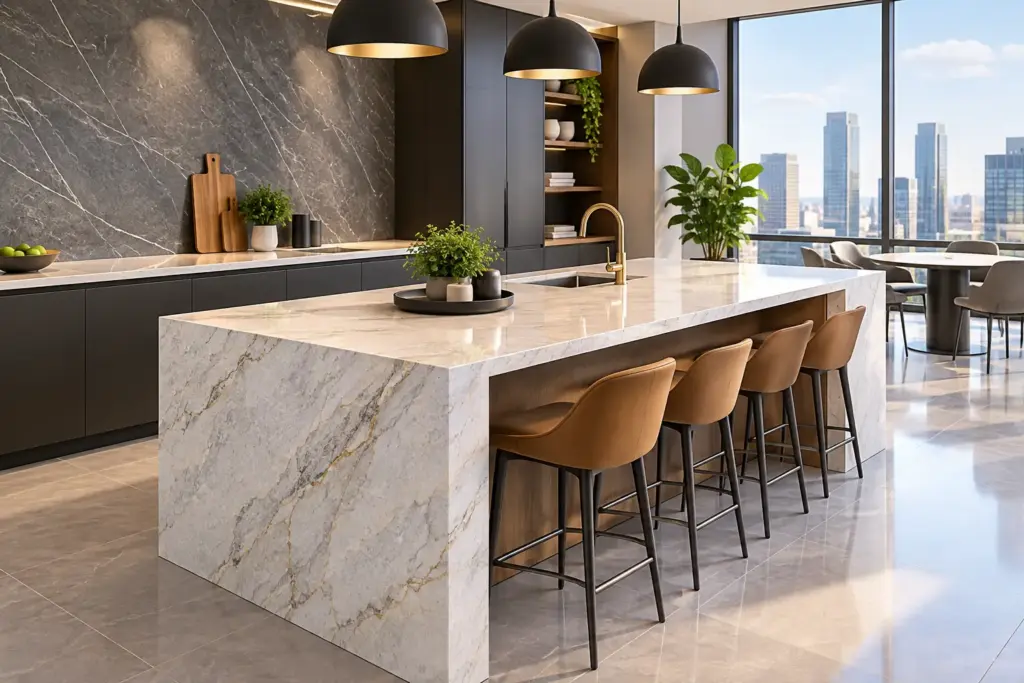
For islands with waterfall ends, consider where the veins will land at the front corners and sides. A well-planned layout can make the stone feel continuous and intentional. A rushed layout can leave the most compelling movement hidden beneath an overhang or interrupted at a join.
Designing With Black Stone in the Kitchen
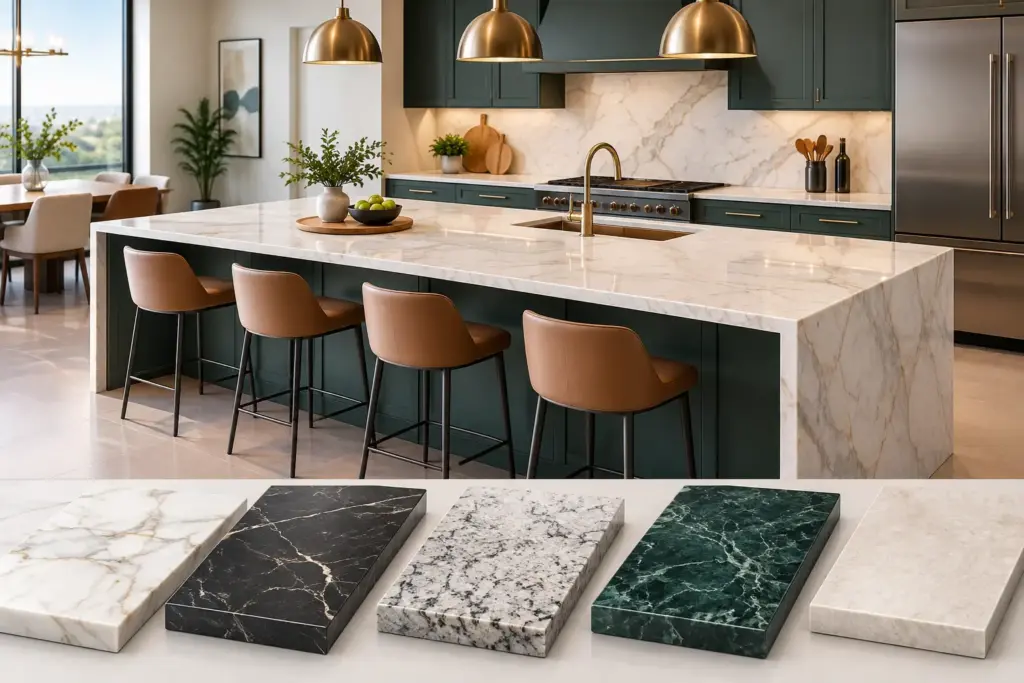
Black countertops do not require an all-black kitchen. In fact, they are often most effective when the room has enough warmth and light to offset their intensity. White, ivory, mushroom, and light gray cabinetry create classic contrast. Natural timber softens the composition and brings out warmer notes in the stone. Deep green, ink blue, or charcoal cabinets can produce a more enveloping result, especially in generous rooms with strong daylight.
Consider the undertone of the black before choosing companion finishes. Blue-black stones tend to work with cooler grays, crisp whites, and silver-toned metals. Brown-black or charcoal surfaces are more accommodating with timber, aged brass, bronze, and warm off-whites. This distinction is subtle, but it prevents a room from feeling accidentally mismatched.
Backsplash choices deserve equal attention. Continuing the same slab up the wall creates a confident, monolithic statement and allows the veining to become part of the architecture. A tiled backsplash introduces texture and can make the stone feel less formal. If the countertop has strong movement, a quieter backsplash will usually give the slab room to perform.
Lighting is not an afterthought. Under-cabinet lighting can reveal the richness of a black surface, while pendants create reflected points of light on polished stone. In a kitchen with limited natural light, combine the dark countertop with lighter vertical surfaces and layered illumination rather than relying on one central fixture.
Practical Performance and Everyday Care
Dark countertops are often chosen because they appear forgiving, but performance depends on the specific surface and finish. Some polished black stones may show fingerprints, water spots, or dust more readily under direct light. Honed finishes can reduce glare, yet certain natural materials may be more vulnerable to oils or marks if they are not properly sealed and maintained.
The answer is not to treat black stone as precious. It is to choose with honest expectations. A busy family kitchen may benefit from an engineered surface with a finish suited to frequent cleaning and high use. A natural stone island can be an extraordinary choice for a client who appreciates its evolving character and is comfortable following recommended sealing and care guidance.
For everyday cleaning, use a soft cloth, warm water, and a pH-neutral cleaner appropriate to the chosen material. Avoid harsh abrasives, strong acidic products, and leaving spills in place for extended periods. Use trivets for very hot cookware and cutting boards for food preparation. These simple habits preserve both the finish and the edge details that make a premium installation feel complete.
Details That Make the Installation Feel Custom
The thickness, edge profile, and slab layout can change the entire read of a black countertop. A slim profile can feel crisp and contemporary. A thicker mitred edge creates greater visual mass and is particularly effective for a substantial island. Simple eased edges remain versatile, while a more detailed profile can suit traditional or transitional interiors.
Do not overlook the sink and faucet. An undermount sink keeps the stone plane uninterrupted, which is especially effective on a veined black surface. A dark sink creates a quiet, integrated look, while stainless steel adds a sharper commercial note. Brass, brushed nickel, and black fittings each create a different conversation with the slab, so viewing finishes together before final selection is worthwhile.
For larger projects, dependable supply and slab-level quality control matter as much as the visual selection. Builders, designers, and stonemasons need confidence that the material inspected is suitable for the intended application and that quantities, timing, and fabrication considerations have been discussed early. Avila Stones approaches this stage as a material consultation, helping clients compare the expressive variation of natural stone with the controlled consistency of engineered and silica-free options.
A black stone surface should not be selected merely because it is dramatic. Choose it because its depth makes the cabinetry clearer, its veining gives the room movement, and its finish suits the life that will happen around it. When those decisions align, the countertop becomes more than a work surface. It becomes the element that gives the entire space its composure.
Ready to Choose Your Stone?
Our team can walk you through every silica-free and natural option in the range.