

Uncategorized
How to Choose Stone Slab Suppliers for Your Project
Compare stone slab suppliers with confidence. Assess slab quality, material fit, safety, lead times, and support for a refined project result with care.
A stone surface is rarely a background finish. It sets the tone for a kitchen island, defines the quiet luxury of a bathroom vanity, or gives a commercial reception area its sense of permanence. That is why choosing stone slab suppliers is about more than finding a color you like. It is about securing the right material, in the right condition, with the guidance and supply certainty a finished project demands.
For homeowners, designers, builders, and stonemasons, the best supplier makes selection feel considered rather than complicated. They help connect the visual decision to practical details: slab dimensions, natural variation, fabrication requirements, maintenance, lead times, and the intended use of the space.
Start With the Space, Not the Swatch
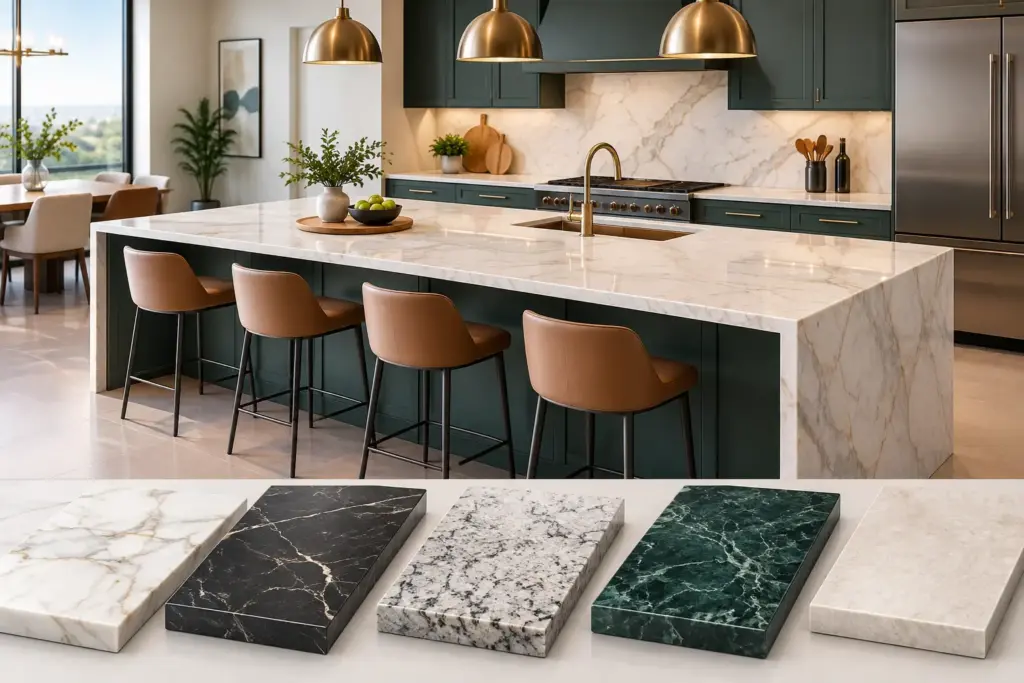
A small sample is useful, but it cannot reveal the full character of a slab. A dramatic Calacatta-inspired vein may look restrained in a sample and become the defining movement across a large island. A deep black surface can feel richly architectural in a sunlit kitchen, yet require more attention to fingerprints and dust in a heavily used workspace.
Before comparing materials, consider how the surface will live. Kitchen countertops need to balance visual impact with daily use. Bathroom surfaces may prioritize a softer palette and moisture resistance. Outdoor entertaining areas call for materials suited to exposure, temperature changes, and the amount of direct sunlight the space receives. In commercial settings, durability, consistency across multiple slabs, and project timing often carry equal weight with appearance.
This early brief gives your supplier something meaningful to work with. Rather than asking for “white stone,” you can discuss a warm or cool white, broad or delicate veining, matte or polished finish, and the level of maintenance that suits the client or household.
What Great Stone Slab Suppliers Do Differently
A credible supplier is not simply a warehouse with inventory. They should understand how slabs translate from a showroom setting into fabricated surfaces, joins, edges, splashbacks, and large-scale installations.
They invite slab-level inspection
Natural stone is inherently individual. Veins, mineral movement, tonal shifts, and small features are part of its appeal, but they also mean each slab must be viewed on its own merits. If you are selecting marble, quartzite, or another natural material for a prominent application, inspect the actual slabs where possible. Look at the overall composition from a distance, then review areas where cutouts, joins, or edge details may be required.
Engineered stone offers a more controlled appearance, though designs with expressive veining still vary in pattern placement from slab to slab. Viewing full slabs allows the fabricator to plan the layout so a waterfall end, island face, or long countertop carries the design with intention.
Quality control matters here. Ask whether slabs are assessed before release and how the supplier handles visible imperfections, edge damage, or inconsistencies that may affect fabrication. A premium project deserves clarity before material reaches the workshop.
They explain material trade-offs plainly
There is no single best surface for every project. Natural stone offers depth, variation, and a sense of geological history that cannot be replicated exactly. It can be an exceptional choice for feature islands, hospitality spaces, luxury bathrooms, and interiors designed around material character. Depending on the stone, it may require sealing and more mindful care around acids, oils, or harsh cleaning products.
Engineered surfaces provide visual consistency, dependable sizing, and lower-maintenance practicality for many residential and commercial applications. Collections inspired by Calacatta, Statuario, and dramatic dark marbles can deliver a striking design statement with greater uniformity across a project.
The right supplier will not push one category simply because it is available. They will explain how each option responds to use, light, budget, and the desired finish. A softly veined Bianco Seta-style surface may suit a calm, layered interior, while a bold Black Oro look can anchor a contemporary room with confidence. The decision should feel aesthetic and informed, not purely transactional.
They treat safety as part of specification
Material safety deserves the same attention as color and pattern. For fabricators and builders, silica-free stone options can be an important part of responsible material selection, particularly where workplace safety requirements and evolving industry practices shape procurement decisions.
Ask suppliers to explain the composition of the products they offer and provide clear product information for your trade team. This is not a detail to leave until fabrication is booked. Early conversations help architects, builders, stonemasons, and homeowners select a surface that aligns with both design intent and project responsibilities.
Questions to Ask Before You Commit
The most useful supplier conversations are specific. Ask whether your preferred slabs are currently available, how many slabs are held, and whether stock can be allocated to your project. For larger kitchens, multi-unit developments, or commercial fit-outs, ask about batch consistency and the ability to source additional material if requirements change.
It is also wise to discuss slab size and thickness before finalizing a design. A grand island, for example, may require a particular slab format to minimize joins. If a join is unavoidable, its location can often be planned around the veining rather than treated as an afterthought. Confirm whether the selected surface is suitable for the intended edge profile, splashback height, outdoor use, or vertical cladding application.
Lead times should be equally clear. Availability of the slab is only one part of the schedule. Fabrication capacity, templating, delivery coordination, and installation sequencing all affect when the finished surface can be installed. A dependable supplier will help distinguish between material availability and the broader project timeline.
Finally, request a transparent quote that makes the scope easy to understand. Material pricing, slab quantities, delivery, and any special handling requirements should be discussed early. The lowest initial figure is not always the strongest value if it introduces uncertainty around slab quality, availability, or support when the project is under pressure.
Balance Design Ambition With Real-World Performance
The most memorable interiors often rely on contrast. A warm timber kitchen can gain clarity from a crisp white engineered surface. Brushed metal, smoked glass, and dark cabinetry can become more sculptural beside richly veined stone. In a restrained palette, a surface such as Santorini Gold or Royal Gold can introduce warmth without overwhelming the room.
Still, visual drama should suit the way a space is used. Highly polished dark surfaces may show marks more readily than lighter, patterned options. Natural materials can develop a gentle patina that some owners value, while others prefer the more uniform look and simpler maintenance profile of engineered stone. Outdoor applications require particular care, as UV exposure, weather, and surrounding finishes can influence both performance and long-term appearance.
A knowledgeable supplier helps make those distinctions before orders are placed. They should be comfortable saying when a requested material is not ideal for a particular setting and suggesting alternatives that preserve the design direction.
Why Samples and Showroom Viewing Still Matter
Digital imagery is excellent for inspiration, but screens alter color, scale, and contrast. A surface that appears pure white online may carry warm cream undertones in person. Fine gray veining can read blue in one light and charcoal in another. Taking a physical sample into the project space allows you to view it beside cabinetry, flooring, paint, fixtures, and natural light throughout the day.
For major surfaces, a showroom visit adds another layer of confidence. You can compare finishes, see how light moves across polished and honed textures, and assess the scale of a full slab. This is particularly valuable when selecting statement materials such as Polar Calacatta, Desert Bloom, Taj Legacy, or Statuario Oro, where the balance of base color and movement defines the final effect.
At Avila Stones, curated slab selection and project-focused guidance support this process, helping clients move from initial inspiration to a material choice that is both visually resolved and ready for fabrication.
Build Supply Confidence Into the Finish Schedule
For trade professionals, stone procurement should be coordinated well before the final finishes stage. Confirm selections early enough to reserve suitable slabs, particularly where a project requires matching pieces, large formats, or a distinctive veining layout. Keep the fabricator involved once a material is shortlisted, since their input on slab yield, cut planning, and installation access can prevent avoidable compromises.
For homeowners, the same principle applies on a smaller scale. Do not leave the countertop selection until cabinetry is already being installed. Earlier selection gives you time to compare options without pressure, refine the design around the chosen slab, and coordinate realistic dates with your builder and stonemason.
The right surface should make the room feel inevitable, as though every finish around it was chosen to belong there. Choose a supplier that protects that outcome with clear advice, carefully inspected material, and dependable support from slab selection through delivery.


Ready to Choose Your Stone?
Our team can walk you through every silica-free and natural option in the range.