
Uncategorized
Choosing Silica-Free Stone Countertops
Silica-free stone countertops pair refined design with a safer fabrication pathway. Learn how to compare materials, finishes, care, and project needs.
A countertop is often the visual anchor of a kitchen: the surface that catches morning light, frames a sculptural tapware choice, and brings cabinetry, flooring, and appliances into one considered composition. Silica-free stone countertops add another requirement to that decision – selecting a surface designed to support a safer fabrication pathway without compromising the elevated finish a premium project demands.
For homeowners, designers, builders, and stonemasons, the opportunity is not simply to replace one material with another. It is to specify a surface with clear performance credentials, an assured supply path, and a look that belongs in the wider architecture of the home or commercial space.
What makes a countertop silica-free?
Silica-free surfaces are manufactured without crystalline silica, the mineral found in varying levels in many stone and engineered products. This distinction matters most during cutting, shaping, drilling, and polishing. Those fabrication processes can create respirable dust, which is why material selection and responsible workshop practices deserve careful attention from the first specification conversation.
The term should never be treated as a vague design label. Ask for the technical documentation for the exact slab or collection being considered, including its composition, fabrication guidance, warranty conditions, and recommended applications. A surface can be visually similar to marble-look engineered stone yet have a very different material makeup.
Silica-free does not mean maintenance-free, indestructible, or free from the need for careful handling during installation. Fabricators should still follow the manufacturer’s guidance and use appropriate dust control, cutting equipment, and site procedures. The value of a silica-free material is that it offers a considered material alternative while maintaining the polished, large-format look expected of contemporary stonework.
Why silica-free stone countertops are gaining attention
The shift toward silica-free options reflects a broader change in how premium projects are evaluated. A beautiful slab is no longer judged only by its veining, color, and price per square foot. Clients and specification teams increasingly want to understand what sits behind the surface: where it comes from, how reliably it can be supplied, how it performs, and what it means for the people fabricating it.
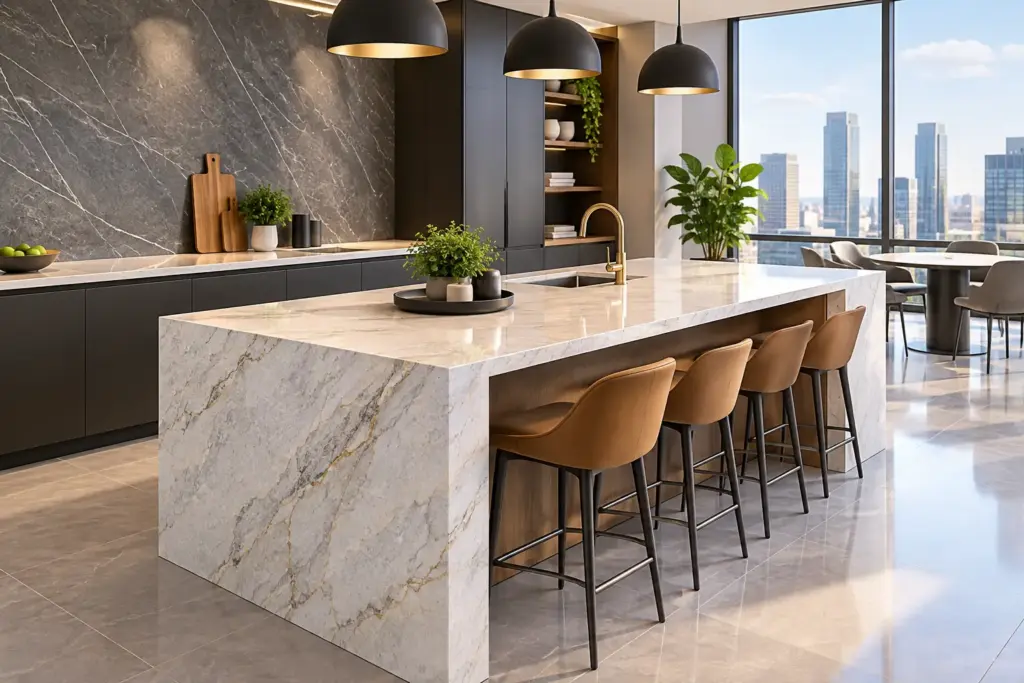
For a kitchen island, this can mean selecting a pale, marble-inspired surface with soft movement that keeps an open-plan room light and composed. In a hospitality or workplace setting, it may mean choosing a darker statement surface that brings depth to a reception desk or café counter while supporting a more considered procurement brief.
Silica-free collections can be especially appealing where a project calls for visual consistency across multiple rooms or residences. Manufactured surfaces generally offer more controlled pattern repetition and color continuity than natural stone, which can simplify large-scale specifications. That consistency should not be mistaken for sameness, however. The best designs use a slab’s veining direction, edge profile, and join placement to make the finished surface feel intentional rather than uniform.
Selecting the right silica-free surface for the space
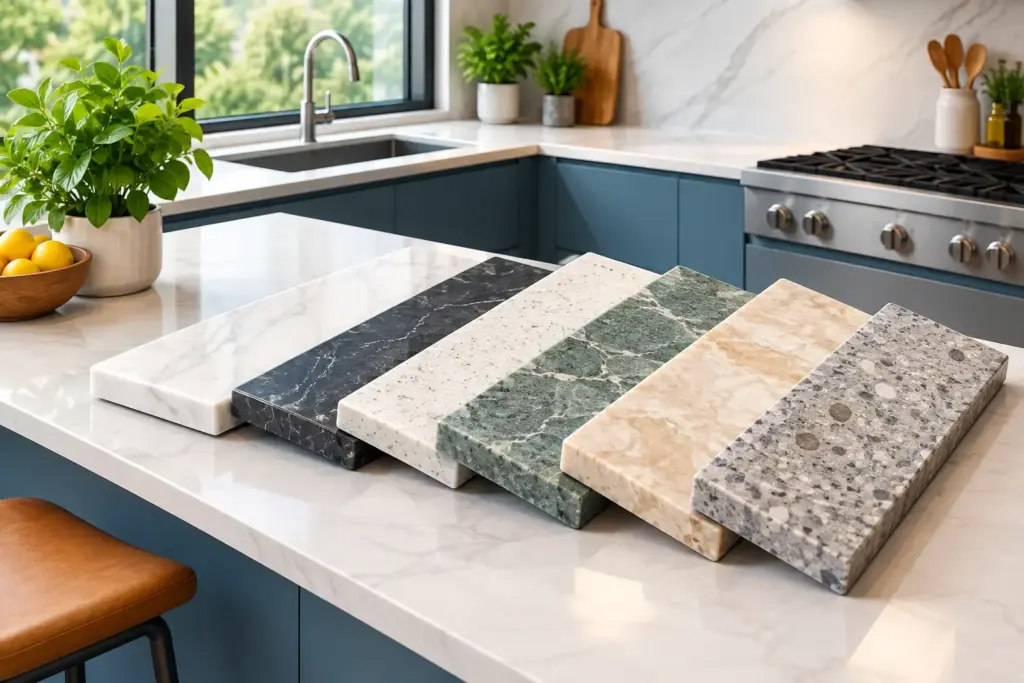
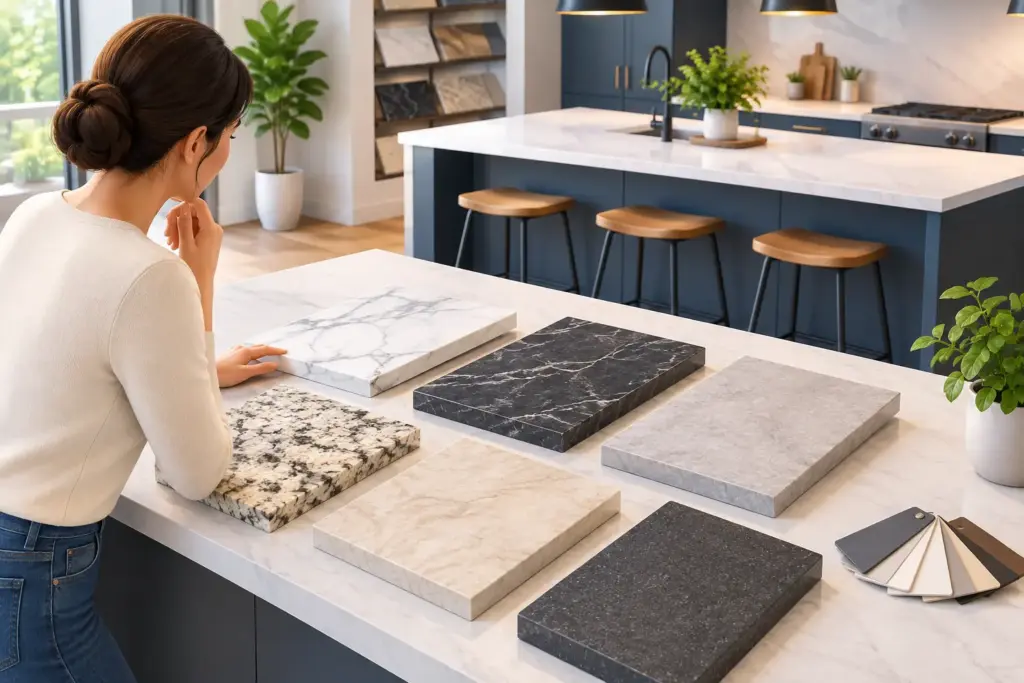
A sample is an essential starting point, but it is not the final decision. Small samples reveal base tone and texture; full slabs reveal scale, movement, veining density, and the way a finish responds to natural and artificial light. A warm white can appear creamy beside oak cabinetry and cooler against crisp painted joinery. Fine gold veining may read quietly in daylight yet become a defining detail under pendant lighting.
Begin with the room’s permanent finishes
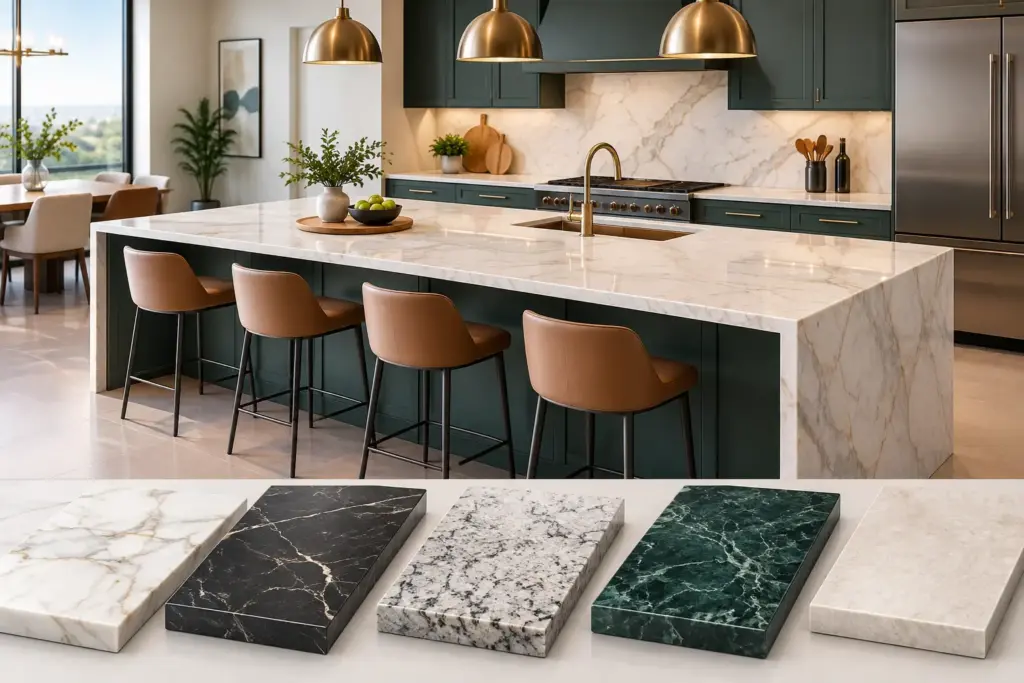
Start with the elements least likely to change: floor tile, cabinetry, wall color, metal finishes, and appliance color. A surface such as Polar Calacatta or Statuario Oro can create a luminous focal point against warm timber and brushed brass, while Black Oro introduces contrast and a more dramatic architectural rhythm. Santorini Gold and Royal Gold can suit interiors that call for warmth and veining with presence, whereas Bianco Seta offers a more restrained, soft-white direction.
For outdoor kitchens and entertaining areas, the question becomes more specific. Confirm whether the chosen product is approved for exterior use, particularly where direct sun, UV exposure, temperature swings, and moisture are expected. A surface that performs beautifully in an indoor pantry may not be the right specification for an exposed barbecue bench.
Match the finish to daily use
A polished surface amplifies color, reflection, and the depth of a marble-inspired pattern. It is often well suited to formal kitchens, bathrooms, and feature islands where light play is part of the design intent. A matte or honed finish can feel softer and more contemporary, particularly alongside natural timber, textured tiles, or minimal cabinetry.
Neither finish is automatically better. Highly reflective finishes can show fingerprints and water spotting more readily in some lighting conditions, while matte finishes may benefit from more deliberate cleaning to prevent residue buildup. Request care guidance for the specific product rather than relying on a generic rule for all stone surfaces.
Resolve fabrication details early
The most successful countertop installations are planned before a slab is ordered. Thickness, edge profile, waterfall ends, drainage grooves, cutouts, and splashback height all influence both the final appearance and the fabrication scope. A delicate 20 mm profile can create a clean, contemporary line, while a built-up edge delivers a more substantial monolithic effect.
Vein matching also needs an early decision. Bookmatching can turn an island waterfall or full-height backsplash into a dramatic feature, but it requires enough material and thoughtful slab allocation. If the project budget is tight, directional veining through the main benchtop may deliver more visual impact than trying to vein-match every return.
Performance expectations: beauty with practical boundaries
Silica-free surfaces are often selected for their low-porosity, easy-care appeal, but performance varies by material and manufacturer. Before making a final selection, confirm resistance to staining, scratching, heat, UV exposure, and chemicals, as well as any limits around hot cookware or harsh cleaning products.
In practical terms, use trivets for hot pans, avoid cutting directly on the surface, and clean spills with a soft cloth and a pH-neutral cleaner recommended for the product. Do not assume that a surface described as heat-resistant is immune to thermal shock. Sudden, concentrated heat can affect many premium countertop materials.
Natural stone remains a compelling choice for projects that value singular movement and geological character. Taj Legacy, for example, brings the depth and variation that only a natural slab can offer. Yet natural stone may require sealing and a different maintenance approach, and it is not automatically silica-free. The right choice depends on the design brief, the client’s expectations, and the intended use of the space.
Questions to ask before placing an order
A premium surface deserves a premium selection process. Beyond choosing a color, ask whether the slab has been inspected for quality, whether the required quantity is available from the same batch, and how long the material will take to reach the fabricator. For projects with multiple benchtops, bathrooms, or commercial zones, confirming batch continuity can prevent unwanted shifts in tone or veining.
It is also wise to clarify the slab dimensions against the planned island and backsplash layout. A large, uninterrupted island may require a specific slab format to avoid a join in a high-visibility location. If a join is unavoidable, its location can often be positioned to work with the veining rather than interrupt it.
At Avila Stones, the selection conversation centers on slab-level quality, material suitability, and project-specific guidance. That matters when the surface is expected to carry the visual weight of a luxury kitchen or perform across a demanding commercial fit-out. Samples can narrow the direction, but viewing the full slab gives clients and trade professionals the confidence to make the final call.
A surface choice that carries the project forward
The best countertop does more than satisfy a checklist. It gives the room a center of gravity, supports the way people cook and gather, and aligns design ambition with informed material decisions. Choose a silica-free option with verified documentation, a finish suited to the setting, and a slab pattern that earns its place in the room – then let the craftsmanship of the installation bring that vision into focus.
Ready to Choose Your Stone?
Our team can walk you through every silica-free and natural option in the range.