
Uncategorized
Best Stone for Kitchen Islands in Premium Homes
Find the best stone for kitchen islands with guidance on marble, quartzite, porcelain, and engineered surfaces for lasting beauty and daily use at home.
A kitchen island is rarely just another work surface. It is where morning coffee lands, guests gather, children spread out homework, and a carefully planned kitchen becomes the center of the home. Choosing the best stone for kitchen islands means balancing that daily reality with the visual impact of a full slab, where color, veining, and finish are impossible to ignore.
There is no single answer for every project. A dramatic natural stone may be perfect for an island designed as a sculptural centerpiece, while a low-maintenance engineered surface can be the smarter choice for a busy family kitchen. The right material is the one that suits the way the space will be used, the light it receives, and the level of care the owner is prepared to give it.
How to Choose the Best Stone for Kitchen Islands
Start with the island’s role in the room. An island that doubles as a preparation zone, breakfast bar, and entertaining surface needs a different specification from one used mainly for serving and display. Consider the size of the slab, the edge profile, whether the stone will continue down the sides in a waterfall detail, and how it will sit alongside cabinetry, flooring, and backsplash finishes.
Lighting matters just as much. A stone with soft gray veining can appear restrained in a bright showroom yet become deeply atmospheric under warm pendant lighting. A white surface may open up a compact kitchen, while charcoal, black, or richly veined stone creates a stronger architectural anchor in a generous open-plan space. Viewing a full slab and a physical sample in the intended light is far more revealing than selecting from a screen image alone.
Practical performance should guide the shortlist. Ask how the surface responds to heat, acids, scratches, staining, and regular cleaning. Also confirm the fabrication requirements, available slab dimensions, lead times, and whether the selected slab has the consistency needed for bookmatching or waterfall panels. These details protect both the finished look and the construction schedule.
Natural Stone: Individual Character at Full Scale
Natural stone gives a kitchen island an authenticity that cannot be repeated exactly. Every slab carries its own movement, mineral detail, and tonal shifts, which is precisely why it is prized in high-end interiors. Used across a long island or wrapped around a waterfall end, the material can make the kitchen feel considered rather than simply fitted out.
Marble remains compelling for its soft luminosity and elegant veining. It suits kitchens where visual refinement is the priority and owners appreciate a surface that develops character over time. Marble does require considered care. Wine, lemon, vinegar, and other acidic ingredients can etch the finish, while spills should be wiped promptly. Honed marble can make subtle marks less visually noticeable than a polished finish, but it is still a material for people comfortable with natural patina.
Quartzite offers a different balance. Often selected for its bold geological movement and strong visual depth, it can provide a more resilient option than marble for heavily used islands. Its performance varies by slab, so accurate material identification, sealing advice, and slab-level inspection remain essential. A premium quartzite island rewards close selection, especially where the goal is a dramatic, one-of-a-kind focal point.
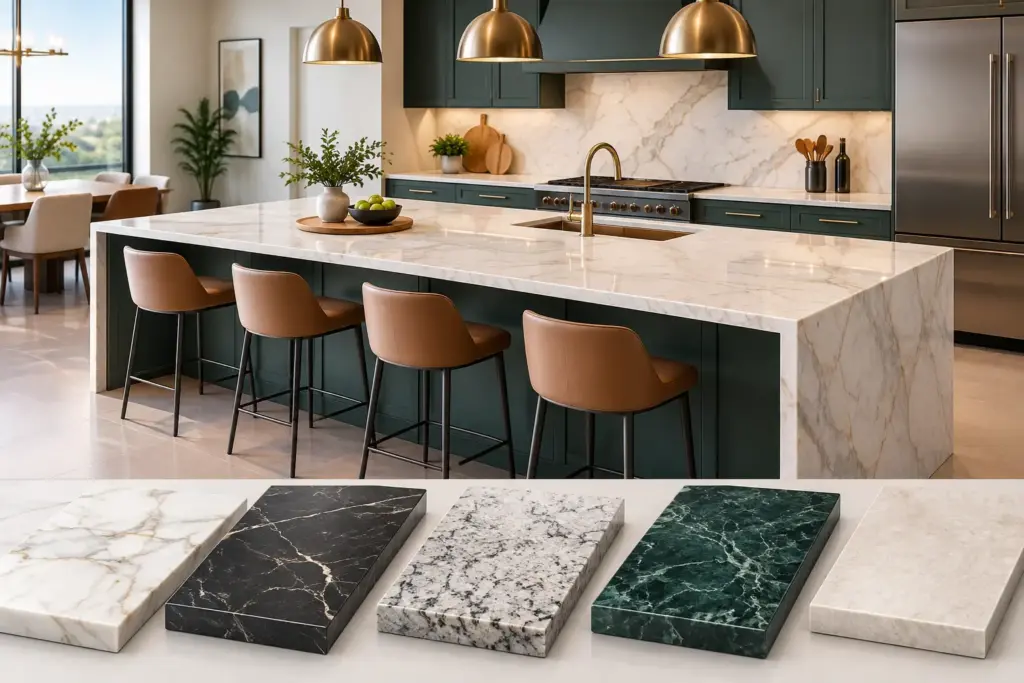
For a warm, layered palette, natural stones with creamy grounds, muted gold accents, or fine linear movement work beautifully with timber, brushed metal, and softly textured cabinetry. Taj Legacy, for example, brings natural variation and a refined sense of depth to a kitchen designed around quiet luxury rather than stark contrast.
Engineered Surfaces: Controlled Beauty for Daily Use
Engineered surfaces are often chosen when a project calls for consistent color, dependable performance, and a more predictable result across multiple slabs. They are especially useful for contemporary kitchens where a clean white field, crisp veining, or a deep black finish needs to remain visually controlled from island to perimeter countertop.
The appeal is not merely practical. Well-designed engineered stone can create the high-contrast drama of dark marble, the graceful movement of Calacatta-inspired surfaces, or the softness of warm white stone without relying on the variability of a natural block. Designs such as Polar Calacatta, Santorini Gold, Black Oro, and Statuario Oro offer distinct directions, from bright and classical to dark, graphic, and architectural.
For homeowners, the key question is not whether engineered stone is better than natural stone. It is whether consistency and lower-maintenance expectations matter more than singular natural variation. For designers and builders, engineered options can also support clearer material planning where several apartments, display suites, or commercial spaces require a coordinated finish.
Safety is part of a responsible specification. Where engineered materials are being considered, confirm the product composition and choose silica-free options where appropriate. This supports safer fabrication pathways while still allowing a project to achieve a polished, design-led surface. Avila Stones offers a dedicated silica-free range alongside curated natural and engineered slabs, helping clients compare aesthetics and practical requirements with greater confidence.
Color and Veining Set the Island’s Presence
A white or pale stone island reflects light and can make a kitchen feel more expansive. It is a natural fit for coastal, minimalist, and classically inspired interiors, particularly when paired with oak, walnut, or painted cabinetry. Fine gray veining keeps the look calm, while warmer gold movement introduces a more luxurious, decorative note.
Dark islands have a different effect. Black, deep charcoal, or espresso-toned stone grounds a light kitchen and adds immediate contrast. Black Oro is suited to spaces that need that sense of depth, particularly with brushed brass, blackened steel, or pale timber details. Dark surfaces can show dust, fingerprints, and crumbs more readily in some finishes, so the household’s maintenance expectations should remain part of the decision.
Veining should be assessed at the scale of the actual island. A pattern that looks subtle on a small sample can become energetic across a large slab. Conversely, a bold slab can feel balanced when cabinetry is simple and surrounding finishes are restrained. There is no need for every material to compete. Let one element carry the visual drama.
Finish, Edge Detail, and Fabrication Matter
The finish changes both appearance and daily experience. Polished stone reflects light and emphasizes color depth, making it especially effective in formal or glamorous kitchens. Honed finishes feel softer and more tactile, with a quieter, more contemporary presence. Leathered or textured finishes can introduce further dimension, though they may require more attention during cleaning depending on the material.
An island’s edge profile also affects its character. A slim mitred edge delivers a crisp, contemporary line and can make a substantial surface appear lighter. A thicker built-up edge feels more monolithic. Rounded edges soften a family kitchen and reduce sharp corners, while a sculpted profile can add traditional detail to a more classic interior.
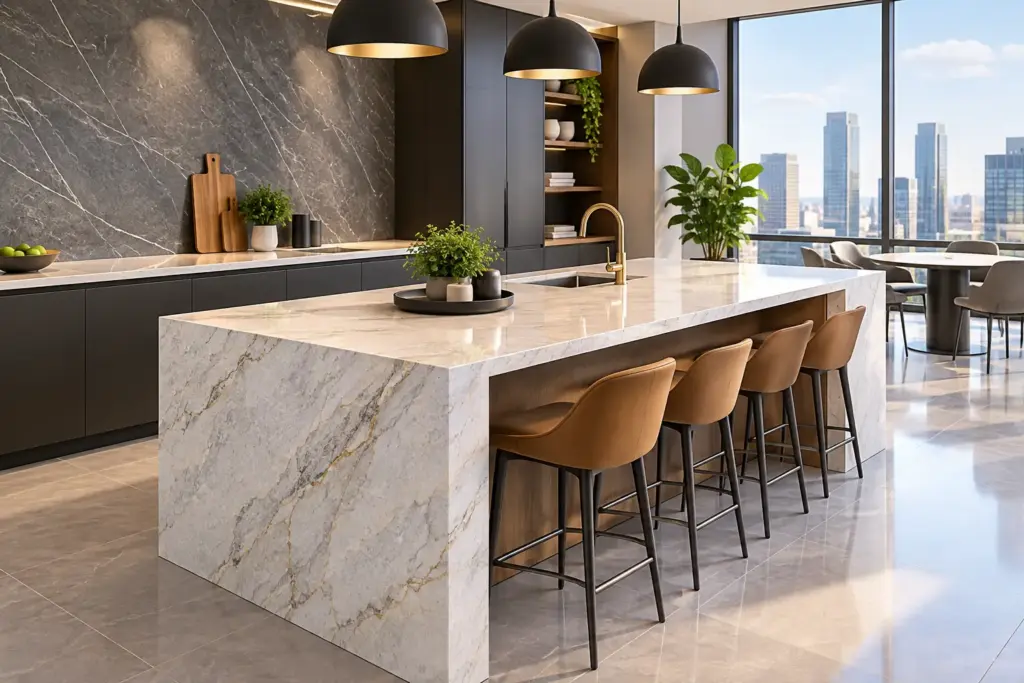
Waterfall ends deserve careful planning. They create a continuous visual statement, but only when the veining direction and joins are resolved thoughtfully before fabrication. A slab with pronounced movement may require additional material to achieve a convincing flow from top to side. This is where full-slab selection and early collaboration between designer, fabricator, and supplier make a visible difference.
A Better Way to Make the Final Selection
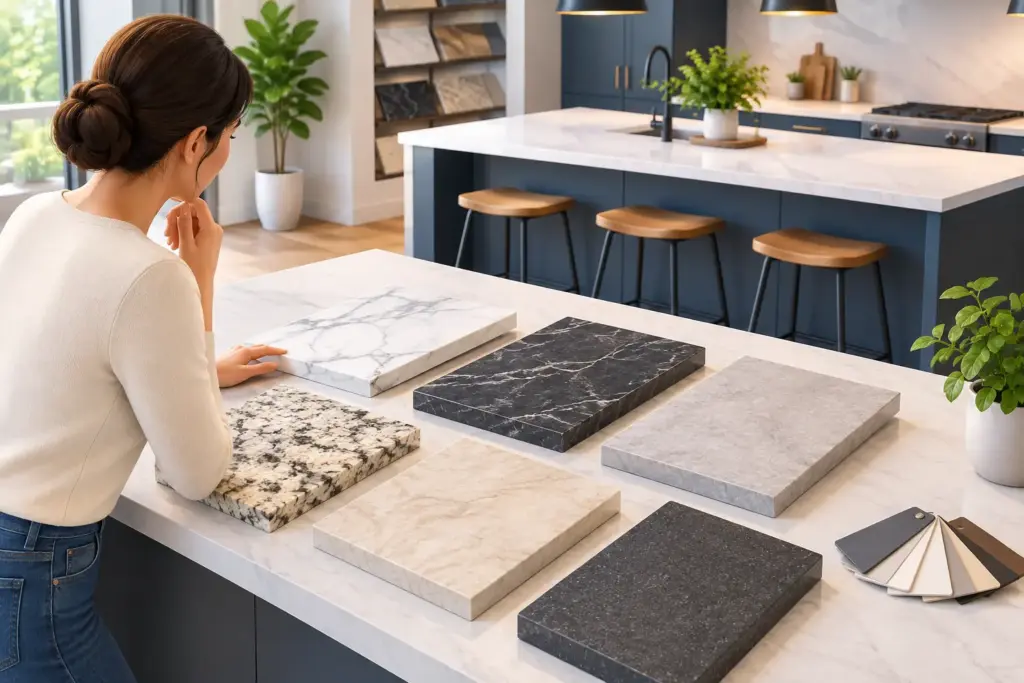
Narrow the choice to two or three materials, then compare them against the actual cabinetry door, flooring sample, metal finish, and backsplash tile. Stand back several feet, then inspect the surface up close. Ask to see the individual slab whenever possible, particularly for natural stone or highly veined engineered designs.
Be candid about use. If the island will host frequent cooking, young children, casual meals, and entertaining, a forgiving, lower-maintenance surface may bring more long-term satisfaction. If the kitchen is intended as a refined entertaining space and natural variation is central to the design, marble or quartzite may be worth the added care.
The best choice should still feel right after the practical questions are answered. A kitchen island is seen and touched more than almost any finish in the home. Choose the stone that meets the brief, performs for the household, and gives the room a presence worth gathering around.

Ready to Choose Your Stone?
Our team can walk you through every silica-free and natural option in the range.