
Uncategorized
How to Choose Countertop Slabs for Your Home
Learn how to choose countertop slabs for your kitchen or bath, balancing material, movement, durability, lighting, edges, and budget for lasting appeal.
A countertop is not a background finish. It is the surface that catches morning light, frames a cooktop, carries a generous island, and sets the visual temperature of a kitchen or bathroom. Knowing how to choose countertop slabs means looking beyond a small sample and considering the complete slab, the room around it, and how the surface will perform once real life begins.
For a refined result, selection should be both emotional and practical. The right stone may have dramatic veining or quiet, layered depth, but it must also suit the scale of the room, the cabinetry, the fabrication plan, and the way the space will be used.
Start With the Room, Not the Slab
A beautiful slab can feel entirely different once it is paired with cabinetry, flooring, hardware, wall color, and natural light. Before selecting a surface, establish the direction of the room. Consider whether the design calls for warmth, contrast, softness, or a strong architectural statement.
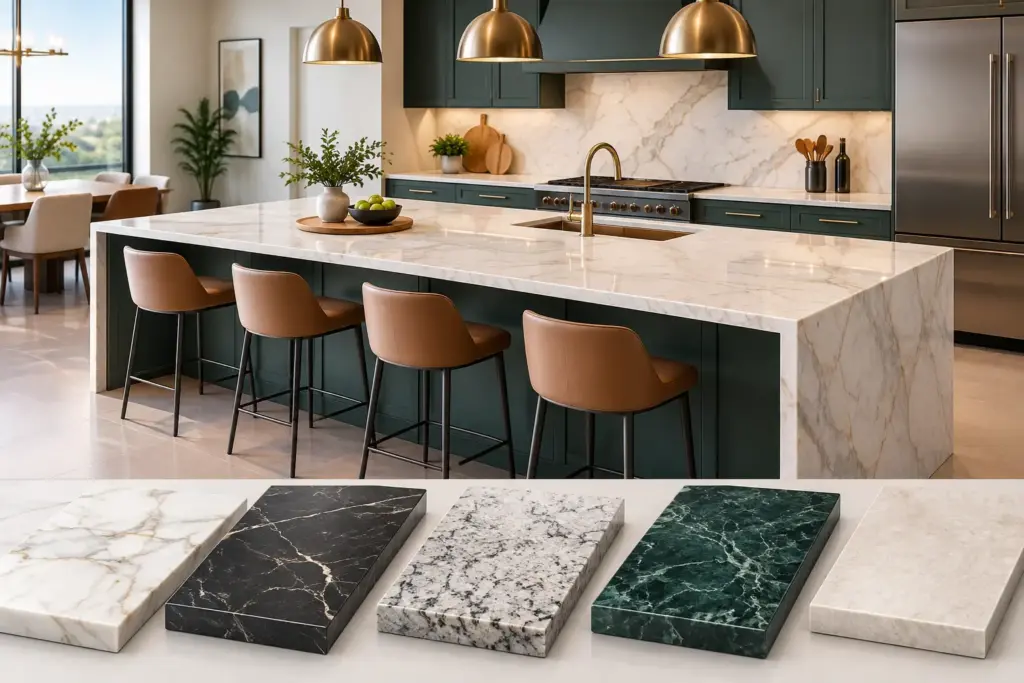
Pale cabinetry and timber details often pair beautifully with surfaces that carry warm gold, beige, or caramel movement. A design such as Santorini Gold or Royal Gold can bring depth without making the room feel heavy. In more contemporary spaces, a crisp white surface with controlled gray veining can create a clean, tailored foundation. Polar Calacatta and Statuario Oro offer this sense of brightness while retaining visual interest.
Dark stone deserves equal consideration. A surface such as Black Oro can anchor a large island or bar with real presence, especially when balanced by lighter joinery, brushed metal, or warm timber. In a compact room, however, a dark slab may absorb light unless there is strong illumination and enough surrounding contrast.
The slab does not need to match every finish. It should give the room a focal point and make the other materials feel intentional.
Decide Between Natural and Engineered Stone
The choice between natural and engineered stone is central to how to choose countertop slabs. Neither is universally better. The right material depends on the appearance you want, the level of variation you welcome, maintenance expectations, and the demands of the project.
Natural stone brings individuality. Each slab is shaped by mineral composition and geological history, so color, veining, and texture can vary significantly. This is part of its appeal. A natural surface such as Taj Legacy can introduce layered warmth and organic movement that cannot be replicated exactly. It is especially compelling in homes designed around timber, natural light, and tactile finishes.
Natural stone may require more considered care, depending on the specific material and finish. Some stones can be more sensitive to acids, oils, or staining, and sealing requirements should be confirmed before specification. For clients who appreciate patina and natural variation, this is often a worthwhile trade-off.
Engineered stone offers a more controlled visual outcome. It is a strong option when a project requires consistency across multiple areas, including a kitchen, pantry, bathrooms, reception counter, or apartment development. Engineered slabs can also offer lower-maintenance practicality for busy family kitchens and commercial settings.
For Australian projects, material safety also deserves a place in the discussion. A silica-free stone range can provide an attractive option for those prioritizing worker and homeowner safety while still seeking a polished, high-impact surface. Always confirm the material composition, fabrication requirements, and suitability for the intended application before proceeding.
View the Whole Slab Before You Commit
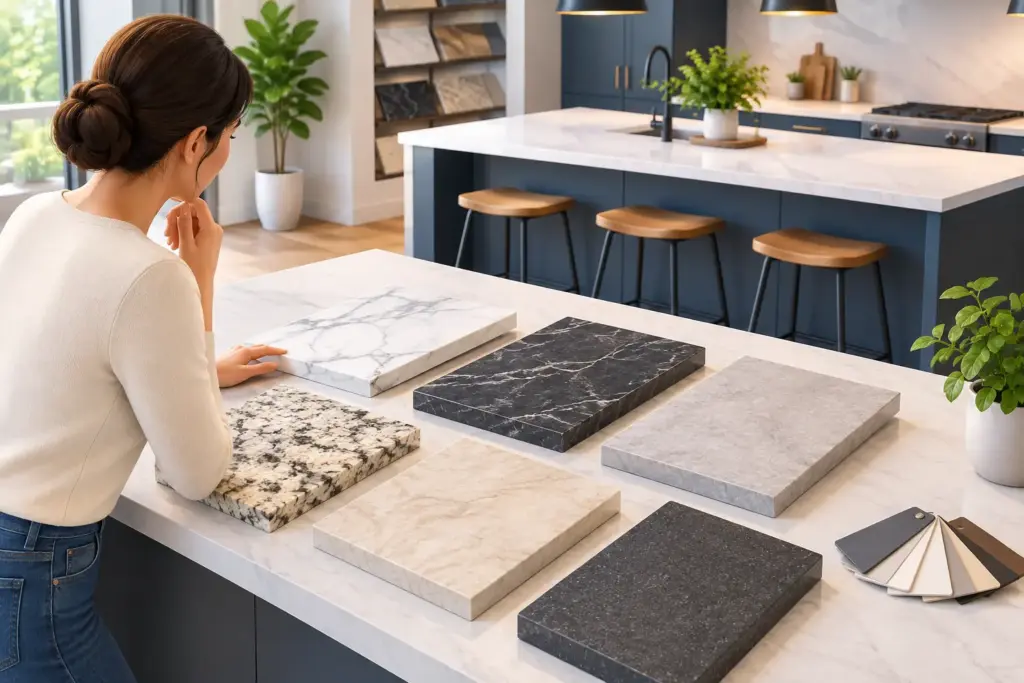
A sample is useful for narrowing a palette. It cannot show the full character of a slab.
Veining may become bolder at the center of the slab, soften at the edges, or shift in direction from one end to the other. This matters most on large islands, waterfall ends, full-height backsplashes, and bookmatched wall features, where the stone becomes a major visual element rather than a simple work surface.
Viewing full slabs allows you to assess three things: the overall color base, the scale of the movement, and where key veins will sit after cutting. A slab with broad, sweeping veining may look spectacular on a three-meter island but overly active in a small galley kitchen. Conversely, a quieter slab may feel understated on display but create a more enduring result once installed across several surfaces.
Ask to see the actual slabs allocated to your project wherever possible. This is particularly valuable with natural stone, where variation is expected, and with engineered designs that feature pronounced movement.
Consider vein direction and continuity
The direction of a vein changes the way a countertop reads. Veins running along the length of an island can emphasize its scale and create a composed, linear appearance. Diagonal or crosswise movement can feel more expressive, but it may need more careful planning around cutouts and joins.
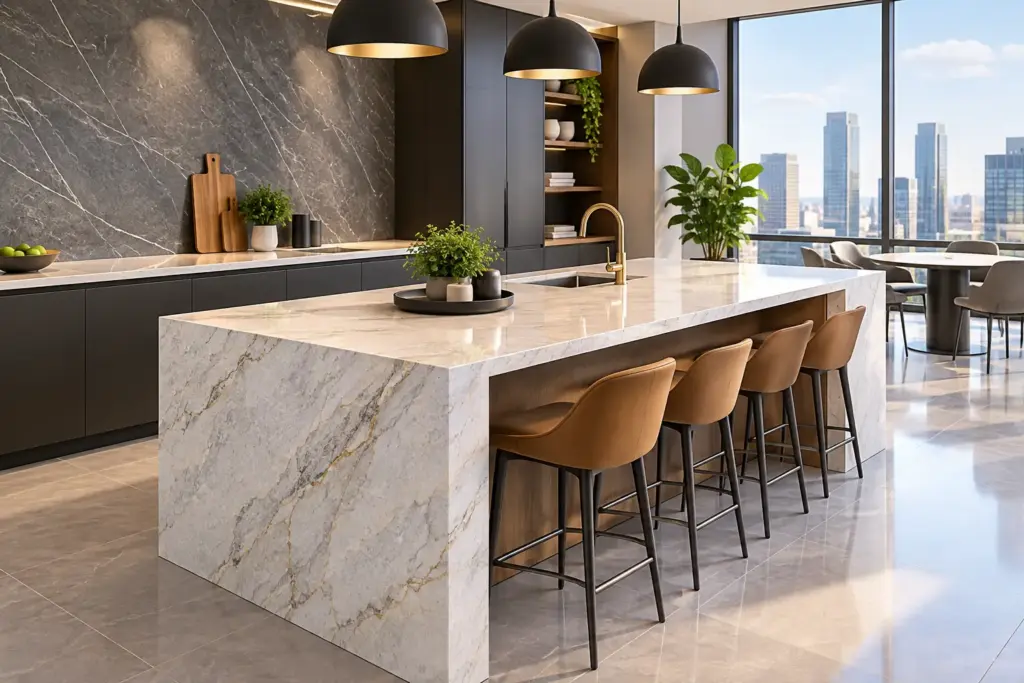
For waterfall panels, a mitered continuation can carry the vein from the horizontal surface down the side of the island. This detail can be striking, but it requires suitable slab layout, skilled fabrication, and allowance for material waste. It is a design decision that should be made early, not after the slabs have been cut.
Match Durability to Daily Use
A countertop should support the way you live, not ask you to change your routine. Think honestly about how the space will be used. A showpiece kitchen used lightly has different needs from a family kitchen with daily cooking, school bags, hot pans, and frequent entertaining.
For high-use kitchens, prioritize stain resistance, ease of cleaning, and a finish that does not make every fingerprint or water mark visible. In bathrooms, consider cosmetics, cleaning products, standing water, and the visual relationship between the countertop and tile. Outdoor areas require a separate conversation, as UV exposure, temperature changes, weather, and installation conditions all influence material suitability.
No premium stone should be treated as indestructible. Use trivets for extreme heat, avoid cutting directly on the surface, and follow the care guidance for the specific stone selected. A material can be durable and still benefit from thoughtful use.
Plan Thickness, Edges, and Details Early
The same slab can look entirely different depending on its thickness and edge profile. A slim, simple edge creates a crisp contemporary line. A thicker laminated profile gives an island more visual weight and can suit larger rooms or classic joinery.
A square eased edge is versatile and restrained. Mitred edges are popular for achieving a substantial, monolithic appearance, especially on islands and waterfall ends. More decorative profiles can work in traditional interiors, although they may require more detailed cleaning and can compete with highly active veining.
Also consider the practical details that affect fabrication. Sink cutouts, cooktop cutouts, drainage grooves, pop-up outlets, overhangs, and joins all need to be resolved before final slab allocation. An experienced stonemason can advise on structural support and fabrication constraints, but the designer, builder, and supplier should be aligned before production begins.
Use Lighting to Test Color Honestly
Stone changes under different light sources. A slab that appears cool gray in a showroom may reveal warmer undertones in afternoon sun. Under warm LED lighting, a bright white surface may look creamier; under cooler lighting, gold veining can become more subdued.
Bring cabinet, paint, tile, and flooring samples to the slab viewing where possible. Then review the selection in daylight and under artificial lighting. This is especially useful when choosing between two similar whites or when the surface includes fine veining that may either complement or clash with surrounding finishes.
For darker stones, lighting has an even greater effect. Proper task lighting and layered ambient lighting can preserve the depth and drama of a dark countertop without making the room feel enclosed.
Set a Budget That Includes the Complete Installation
The slab price is only one part of the investment. Your final project cost may also reflect fabrication, transport, installation, cutouts, edge details, sink supports, backsplash pieces, waste, and the number of slabs required.
A complex island with waterfall ends may use more material than its dimensions suggest. A heavily veined slab may require a particular layout to achieve visual continuity, which can affect yield. Large-format applications and bookmatched walls also require careful planning and may call for additional slabs.
This does not mean avoiding statement details. It means pricing the design you actually want rather than comparing surfaces only by square footage. Clear project-specific quoting makes it easier to weigh a simpler edge profile against a more dramatic waterfall, or natural variation against the consistency of engineered stone.
Choose a Supplier That Supports the Decision
Premium material selection is more confident when it is backed by slab-level inspection, accessible samples, and practical guidance on lead times and availability. For builders, designers, and homeowners, dependable supply matters just as much as visual appeal. A delayed or substituted surface can affect cabinetry schedules, installation sequencing, and the finished design.
At Avila Stones, the selection process is built around curated global sourcing, physical slab viewing, and project-focused support for residential and commercial applications. The goal is not simply to select an attractive surface, but to specify one that arrives with the quality, scale, and character the project requires.
The most successful countertop is one you continue to notice for the right reasons: its movement in the light, its confidence beside the cabinetry, and its ability to make everyday use feel considered.

Ready to Choose Your Stone?
Our team can walk you through every silica-free and natural option in the range.