
Uncategorized
How to Choose Durable Surfaces for Busy Families
Choose durable surfaces busy families can rely on, with polished guidance on stone, care, heat, stains, and design choices for hardworking homes every day.
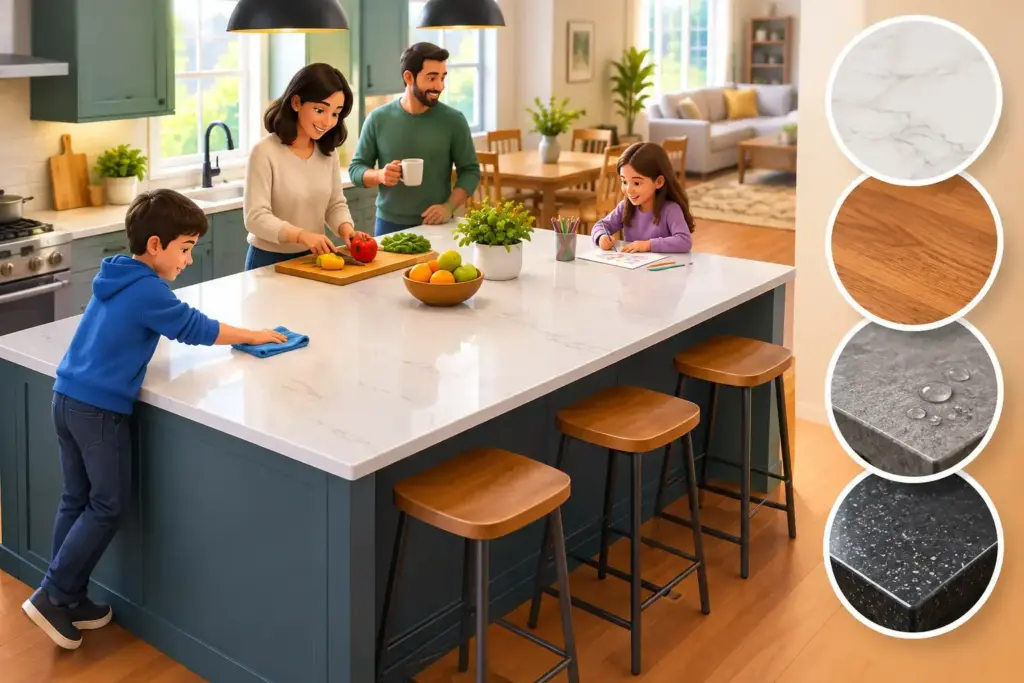
A family kitchen is rarely used gently. It is where lunchboxes are packed at speed, homework spreads across the island, and a hot pan may land before anyone reaches for a trivet. The search for durable surfaces busy families can truly live with is about more than choosing the hardest material. It is about finding a surface that holds its poise through daily life while making the room feel considered, welcoming, and distinctly yours.
For a premium renovation or new build, stone often earns its place because it brings visual permanence to the hardest-working rooms in the home. The right selection balances resistance to stains, heat, scratches, moisture, and impact with the maintenance level your household will realistically maintain.
What durable surfaces need to handle
Durability is not one performance measure. A countertop that handles heat well may still need protection from acidic spills. A surface with excellent stain resistance may be less forgiving of heavy impacts at an exposed edge. The best choice begins with an honest look at how the room is used.
In a family kitchen, the usual pressures are repeated cleaning, food and drink spills, school projects, sliding appliances, and the occasional dropped utensil. Bathrooms add soap residue, cosmetics, humidity, and water around the vanity. Outdoor entertaining areas face UV exposure, changing temperatures, grease, and the practical demands of weekend gatherings.
A beautiful surface should not make people nervous about using the room. At the same time, a family-friendly choice does not have to look plain or purely utilitarian. Veining, movement, and a carefully chosen finish can give a practical material the presence of a true design feature.
Engineered stone for everyday confidence
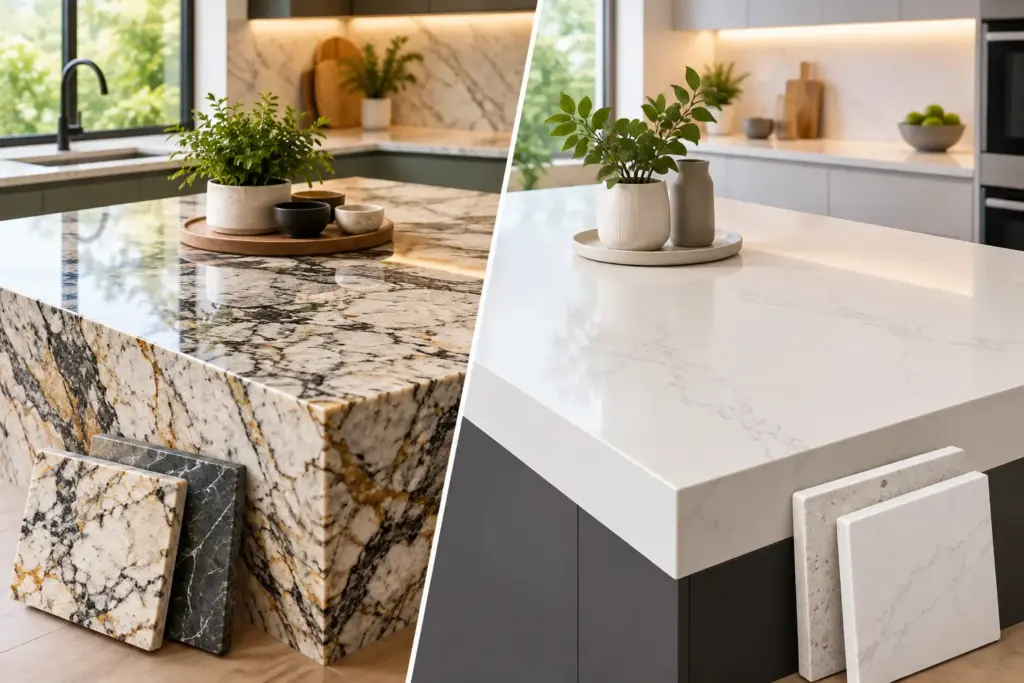
Engineered stone is often a strong fit for kitchens, laundries, and bathroom vanities because it offers a consistent appearance with a low-maintenance profile. Its non-porous or very low-porosity composition makes everyday spills easier to manage, particularly when compared with more absorbent natural materials.
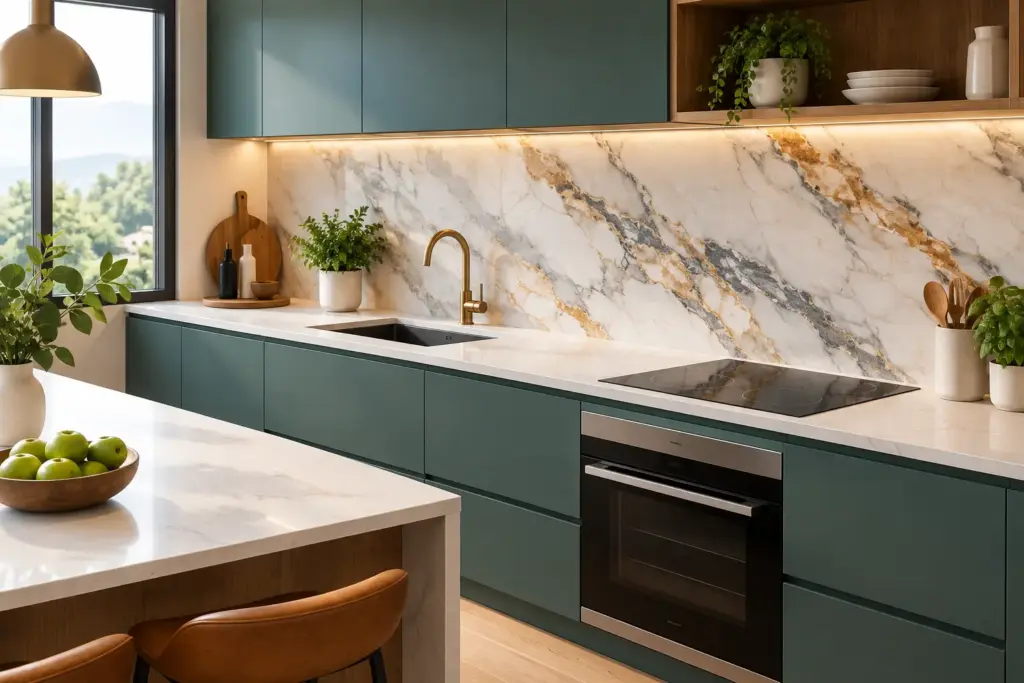
For families who want a bright marble-inspired kitchen without building their routine around frequent sealing, an engineered surface can be a compelling answer. Designs such as Polar Calacatta, Statuario Oro, and Santorini Gold create the pale ground and expressive veining associated with classic stone, while allowing greater consistency from slab to slab. That consistency matters when a large island, full-height backsplash, and multiple work zones need to read as one composed scheme.
Dark, dramatic surfaces can also be highly practical when selected with care. Black Oro brings depth and contrast to a kitchen, though very dark polished finishes may show fingerprints, dust, or water marks more readily than softer mid-tones or textured finishes. This is not a reason to avoid them. It simply means the visual effect should be weighed against the cleaning habits of the household.
For clients prioritizing material safety, silica-free surface options deserve direct discussion early in the selection process. The material, fabrication method, installation requirements, and applicable local regulations should be considered together. A supplier and fabricator should be able to provide clear information rather than treating safety as an afterthought.
The trade-off: heat and edges still matter
Engineered surfaces are durable, but they are not indestructible. Use trivets for hot cookware, particularly after an item has come directly from a cooktop or oven. Avoid cutting directly on any stone surface, and give special attention to exposed waterfall ends, slim-profile edges, and overhangs where a hard impact can cause damage.
Thoughtful detailing makes a meaningful difference. A slightly eased edge is generally more forgiving than a sharp profile, while a well-planned overhang can keep seating comfortable without placing unnecessary stress on the slab.
Natural stone brings character, with a care commitment
Natural stone delivers a depth that cannot be repeated exactly. Its veining, mineral variation, and tonal shifts give each slab its own identity, turning an island or vanity into a focal point rather than simply a work surface. Taj Legacy, for example, can bring soft warmth and movement that works beautifully with timber, brushed metal, and layered neutral interiors.
For many homeowners, that individuality is precisely the appeal. Natural stone develops a relationship with the home over time. A small etch mark or gentle patina may be seen as part of its story rather than a flaw to erase.
That perspective is key. Depending on the specific natural stone selected, sealing and more attentive care may be required. Acidic foods and drinks, oils, strong cleaners, and standing water should be dealt with promptly. A busy household can absolutely enjoy natural stone, but it suits owners who appreciate variation and are comfortable with a little more care.
Natural stone is often especially effective in areas where visual impact leads the brief: a statement island, powder room vanity, fireplace surround, or feature wall. It can also work wonderfully in a family kitchen when the household understands its care needs and the stone itself is suited to the application.
Durable surfaces for busy families start with the room
Rather than choosing one material for every space, consider the role of each room. The kitchen island may need a highly stain-resistant engineered surface because it doubles as a dining table, craft station, and serving area. A powder room may be the ideal place for a more expressive natural slab, where moisture and food spills are less constant. Outdoors, choose materials and finishes specified for exterior conditions rather than assuming an indoor surface will perform the same way in direct sun and weather.
Finish matters as much as material. A polished surface reflects light and emphasizes veining with a refined clarity, making it well suited to elegant kitchens and bathrooms. Honed or textured finishes can create a softer, more architectural feel and may make day-to-day marks less noticeable. Their care requirements vary, so request guidance based on the exact slab and intended setting.
Color also has practical implications. Warm whites and layered neutrals are forgiving choices that keep a room light while softening the appearance of crumbs and minor marks. Strong veining introduces movement that can disguise everyday visual noise. Very plain, ultra-dark, or mirror-polished surfaces can be spectacular, but they tend to reveal residue faster.
Design details that protect the investment
The most enduring projects treat the slab, fabrication, and installation as one decision. Even premium material can underperform if it is poorly supported, incorrectly joined, or fabricated without care for the slab’s natural direction and structural needs.
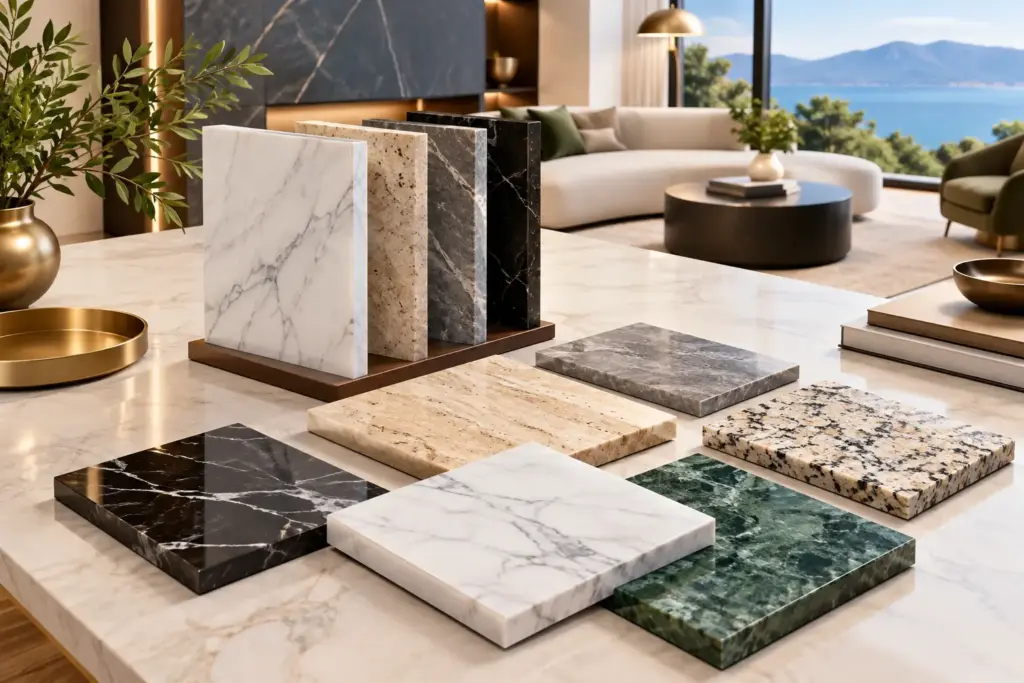
Before finalizing a selection, view the actual slab where possible. Samples are useful for assessing color against cabinetry and flooring, but they cannot fully show the scale of veining, the distribution of movement, or the effect of changing light across a full surface. Slab-level inspection helps ensure that a dramatic vein is placed intentionally across an island or backsplash, rather than appearing by chance in a less desirable location.
Discuss sink cutouts, cooktop clearances, drainage, wall returns, and appliance openings before fabrication begins. These details influence both longevity and the finished look. For larger kitchens, a fabricator can advise where joins may be needed and how to position them discreetly without compromising the design.
Avila Stones supports this selection process through curated slabs, sample access, and project-focused guidance, helping homeowners and trade professionals compare appearance, practical performance, and supply requirements before committing to a surface.
A care routine that works in real life
The best care routine is one that can be repeated without effort. For most stone surfaces, wipe spills with a soft cloth, warm water, and a pH-neutral cleaner recommended for the material. Skip abrasive pads, harsh chemicals, and products that leave a waxy film. Use chopping boards, trivets, and coasters as normal kitchen tools, not as ceremonial protections that make the room feel off-limits.
If children use the island for drawing, baking, or science projects, create a small drawer or nearby tray for mats and boards. This keeps protection close at hand without interrupting the rhythm of family life. It is a modest planning decision that preserves a premium finish for years.
Choose the surface that suits the way your family actually gathers, cooks, and cleans. When material performance and design are considered together, the kitchen becomes easier to live in and more rewarding to come home to.
Ready to Choose Your Stone?
Our team can walk you through every silica-free and natural option in the range.