
Uncategorized
Natural vs Engineered Stone: Which Fits Your Home?
Compare natural vs engineered stone for kitchens, baths, and outdoor spaces. See how beauty, upkeep, safety, and budget shape the right surface choice.
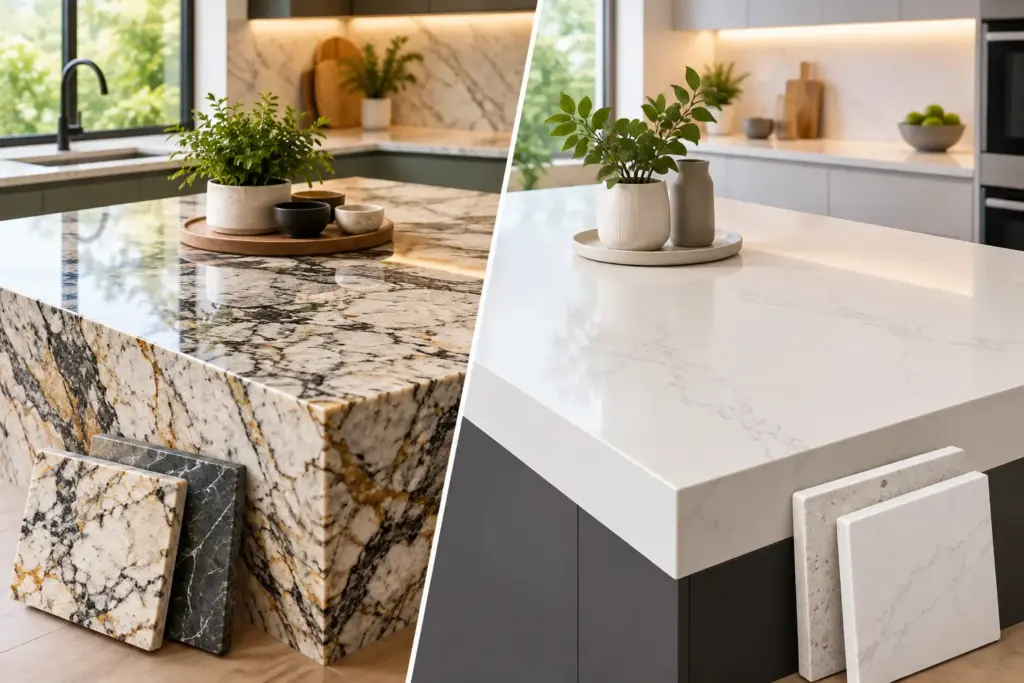
A dramatic kitchen island can carry an entire room. The question is whether its character should come from geology or precision. In the natural vs engineered stone decision, neither material is automatically the better choice. The right surface is the one that suits the way the space will be used, the level of visual consistency the design calls for, and the maintenance the owner is prepared to give it.
For a quiet, tonal interior, a pale engineered slab with controlled veining can create a calm, composed finish. For a home that calls for singular movement, mineral depth, and a surface no other project can replicate, natural stone offers something unmistakably individual. Understanding the practical differences early helps homeowners, designers, builders, and stonemasons specify with confidence.
Natural vs Engineered Stone: The Essential Difference
Natural stone is formed over time within the earth, then quarried and cut into slabs. Marble, granite, quartzite, travertine, and other natural materials each have their own composition, density, movement, and response to daily use. Veins, fossils, crystalline patterns, and shifts in color are inherent to the slab. They are not defects to be engineered away, but part of the material’s identity.
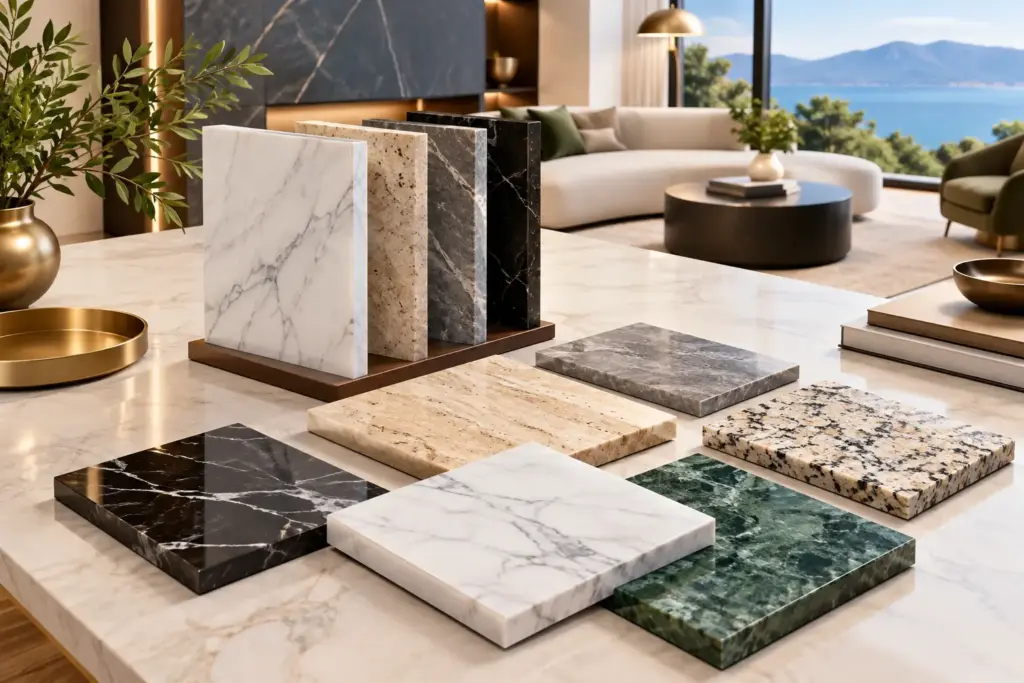
Engineered stone is manufactured from carefully selected mineral components, pigments, and binders to create a controlled surface. This process allows a refined range of colors and patterns, from subtle white backgrounds to bold, high-contrast veining. Collections such as Polar Calacatta, Santorini Gold, Black Oro, Desert Bloom, Royal Gold, Bianco Seta, and Statuario Oro make it possible to achieve a deliberate design direction across a kitchen, bathroom, or commercial interior.
The distinction matters most at slab selection. With natural stone, the exact slab is the design. With engineered stone, the selected colorway and finish offer greater predictability from one slab to the next, although samples should still be viewed as a guide rather than an exact promise.
Choose Natural Stone for Irreplaceable Character
Natural stone has a presence that is difficult to reproduce. Light may catch a crystalline section in quartzite, trace the soft movement of marble, or reveal quiet tonal layers that only become apparent once a full slab is installed. In a large island, fireplace surround, or statement bathroom, this visual depth can turn a practical surface into the architectural focal point.
It is especially compelling when a project welcomes variation. A client who appreciates that the veining will move differently across two vanity tops, or that one slab may contain warmer undertones than another, will often find natural stone more rewarding over time. Materials such as Taj Legacy bring a tailored, elevated feel because their variation is genuine, not repeated.
That character comes with responsibility. Many natural stones benefit from sealing, and some are more susceptible to etching, staining, or scratching than engineered surfaces. Marble, for example, can develop a soft patina in busy kitchens. Some owners see this as part of its lived-in beauty; others may prefer a more forgiving material for a family kitchen or a high-turnover hospitality setting.
Natural stone is not a single performance category. A dense quartzite can suit demanding countertop applications very differently from a softer, more porous stone. The specific material, finish, edge detail, and location should be considered together, rather than relying on broad assumptions about natural stone as a whole.
Choose Engineered Stone for Control and Consistency
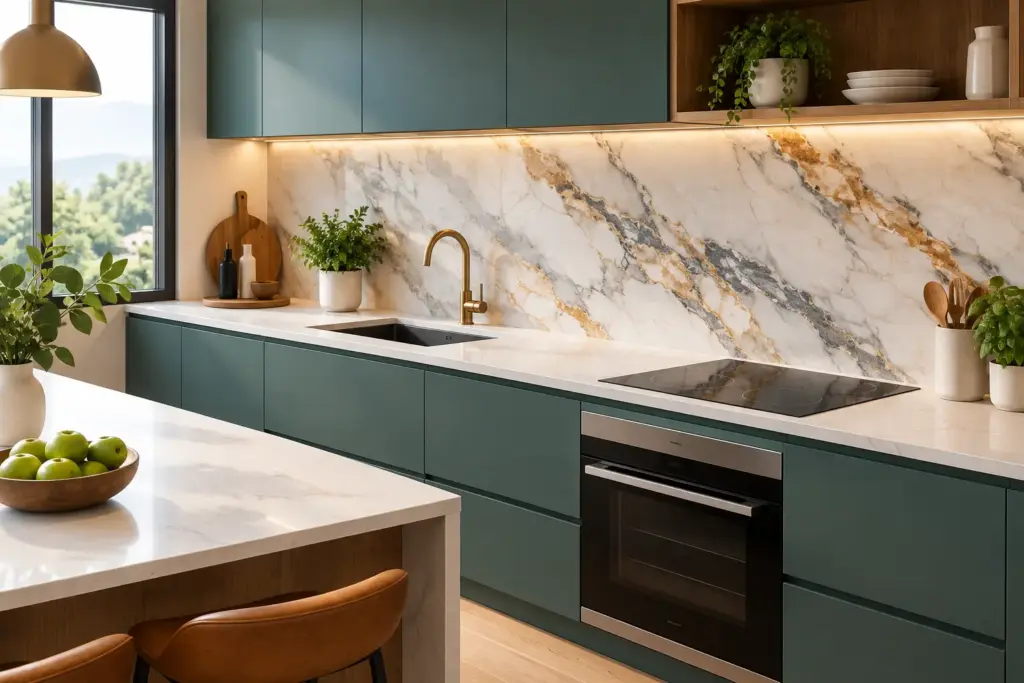
Engineered stone is often specified when the design depends on a repeatable palette. Its consistent background color and considered veining make it easier to coordinate cabinetry, flooring, paint, metals, and wall finishes before every slab has been finalized. This is particularly valuable across multi-room homes, apartment developments, workplace interiors, and commercial spaces where visual alignment and supply certainty matter.
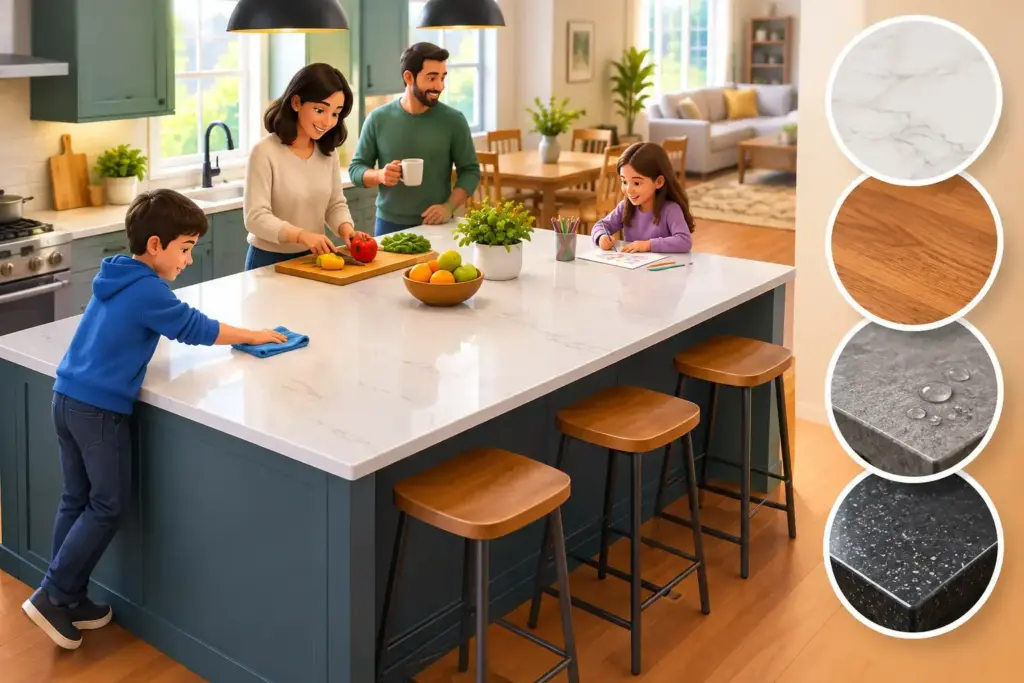
Maintenance is another clear advantage. Many engineered surfaces are nonporous or low-maintenance by design, making everyday cleaning straightforward. They can be a practical choice for a kitchen that sees frequent cooking, a bathroom used by a busy household, or a project where a polished appearance needs to be simple to maintain.
The trade-off is that engineered stone does not offer the one-of-one geology of a natural slab. Even beautifully designed veining is intentional and repeatable to a degree. For some schemes, that precision is exactly right. For others, especially homes built around expressive natural materials, it can feel less layered than stone formed by nature.
Safety should also be part of the conversation. Not all engineered surfaces have the same composition, and fabrication requirements vary by product. Silica-free stone options provide an important pathway for projects prioritizing worker and homeowner safety, but product documentation and fabrication practices should always be reviewed for the specific material being considered.
Performance Depends on Where the Stone Will Live
A countertop near daily cooking needs a different assessment than a powder room vanity. In kitchens, ask how often acidic foods, oil, wine, and hot cookware are likely to meet the surface. In bathrooms, consider cosmetics, water exposure, and the desired cleaning routine. In commercial settings, think beyond appearance to traffic, cleaning protocols, replacement planning, and the scale of the installation.
Outdoor applications require even closer attention. Sun exposure, heat, rain, salt air, freeze-thaw conditions, and ultraviolet stability can affect a material’s suitability and long-term appearance. A surface that performs beautifully in an interior kitchen may not be appropriate for an exposed outdoor bar. Confirm that the chosen slab, finish, adhesive system, and installation method are suited to the exact environment.
It is also worth separating heat resistance from heat-proofing. Stone surfaces can withstand normal household conditions well, but direct heat and thermal shock remain risks depending on the material. Trivets and sensible daily care are still good practice, particularly with premium surfaces.
Budget Is More Than the Slab Price
Comparing a per-square-foot slab price alone rarely gives a complete picture. The final cost can be shaped by slab yield, pattern matching, the number of cutouts, waterfall ends, edge profiles, transport, site access, and installation complexity. A highly figured natural slab may require careful layout to preserve its movement, while a large engineered design may need multiple slabs to maintain vein direction across a long island.
Natural stone can also involve more variation in availability. Once a specific block or slab is sold, an exact match may not be available again. That scarcity is part of its appeal, but it makes timely slab selection especially important. Engineered collections can offer more predictable visual continuity, which can simplify planning for larger or staged projects.
For either material, slab-level inspection matters. View the full slab where possible, not just a small sample. Look at it under natural and interior lighting, and place cabinet, tile, metal, and paint samples against it. A vein that feels soft in a showroom can become the strongest element in a sunlit kitchen.
How to Make the Final Selection
Begin with the room’s non-negotiables. If you want a surface with unique movement and are comfortable with considered care, natural stone may be the right foundation. If you need a low-maintenance finish with a tightly managed palette, engineered stone may offer the better balance of performance and design control.
Then consider the slab at the scale it will be seen. A small sample cannot show how a bold vein will travel across a ten-foot island, where seams may fall, or how a honed finish will soften reflections. Bring the fabricator into the decision early, particularly for miters, waterfall panels, bookmatching, and oversized pieces.
At Avila Stones, the strongest selections begin with this kind of practical design conversation: how the slab will look, how it will work, and how reliably it can be supplied for the project. Request samples, inspect the material carefully, and choose the surface that will still feel right after years of daily use. The most successful stone is not simply beautiful on installation day – it belongs to the life of the space.
Ready to Choose Your Stone?
Our team can walk you through every silica-free and natural option in the range.