
Uncategorized
Silica-Free Versus Porcelain for Premium Spaces
Compare silica free versus porcelain for kitchens, baths, and outdoor spaces, with practical guidance on safety, style, fabrication, and upkeep choices.
A surface can set the entire mood of a kitchen or bathroom. The soft movement of a marble-inspired slab, a deep mineral-black backdrop, or a pale matte finish can change how cabinetry, lighting, and joinery are perceived. Yet when clients compare silica-free versus porcelain, the decision cannot rest on appearance alone. These materials answer different questions about fabrication, performance, installation, and the character a finished space will carry.
For homeowners, designers, builders, and stonemasons, the strongest choice is rarely the one with the best showroom first impression. It is the surface that suits the application, the design intent, and the practical realities of the project from cutting through to daily use.
Silica-Free Versus Porcelain: Start With the Right Comparison
Silica-free engineered stone and porcelain are not interchangeable categories. Silica-free describes a surface formulated without crystalline silica, while porcelain is a ceramic material made by firing refined mineral components at very high temperatures. That distinction matters, particularly when considering workshop safety and compliance.
A silica-free engineered surface is designed to provide the visual consistency and practicality many clients expect from engineered stone while removing crystalline silica from its composition. In Australia, where workplace safety requirements around engineered stone have changed significantly, this makes material transparency a central part of specification. Always ask for current product documentation and fabrication guidance rather than relying on a generic label.
Porcelain, meanwhile, is often selected for its slim profile, heat tolerance, and ability to recreate natural stone, concrete, metal, or timber-inspired finishes. It may contain silica-bearing raw materials, so it should not automatically be described as silica-free. The relevant safety question is not only what the finished slab looks like, but also how it is manufactured, cut, drilled, and installed. Experienced fabricators use appropriate methods, equipment, and controls for every material.
The practical takeaway is simple: specify a verified silica-free product when silica-free composition is a project requirement. Choose porcelain when its particular technical and visual strengths suit the application. Neither decision should be based on assumption.
The Visual Difference Is More Than a Pattern
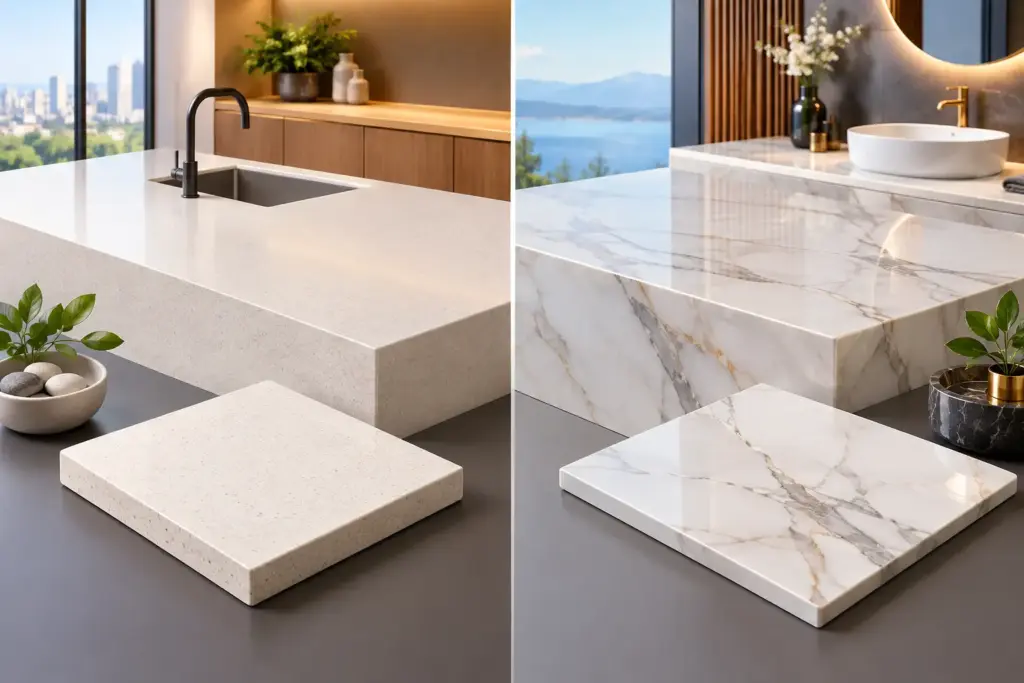
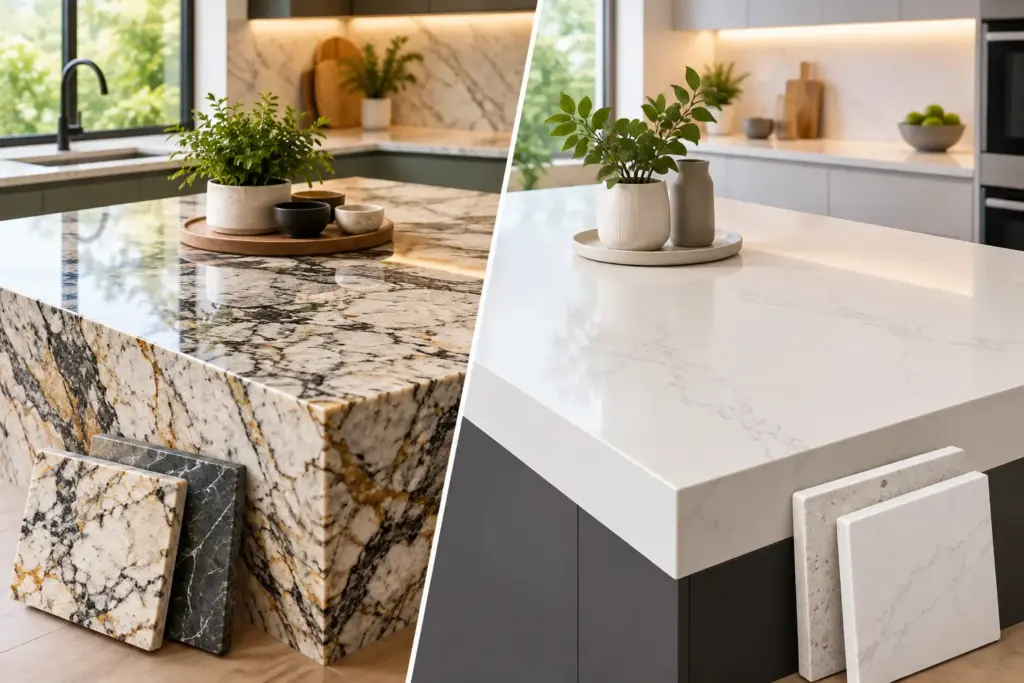
Both materials can create a refined, architectural finish, but they tend to deliver beauty in different ways. Silica-free engineered surfaces are especially compelling when a project calls for a substantial slab presence and controlled visual continuity. They can bring the luminous veining of Calacatta-inspired stone, warm gold movement, or restrained pale neutrals to a large island, waterfall edge, or bathroom vanity with a composed, tailored effect.
This consistency is valuable in open-plan homes. When a kitchen island, back wall, and adjacent bar need to read as one deliberate composition, a carefully selected engineered slab can create cohesion without the stronger variation found in many natural stones.
Porcelain often has a more graphic, layered surface character. Modern printing and finishing techniques can produce striking marble effects, dramatic dark stones, soft cement looks, and textured matte finishes. Large-format porcelain can look exceptionally elegant, particularly on wall cladding, fireplace surrounds, bathroom walls, and outdoor entertaining zones.
There is a trade-off. A porcelain pattern may be highly convincing from a distance, but the slab’s thinner profile and finished edge can create a different visual result than a thicker engineered stone benchtop. For a monumental island designed to anchor a room, edge detailing deserves close attention. A mitered porcelain edge can create visual depth, but it relies on precise fabrication and installation.
Consider Samples in the Actual Light
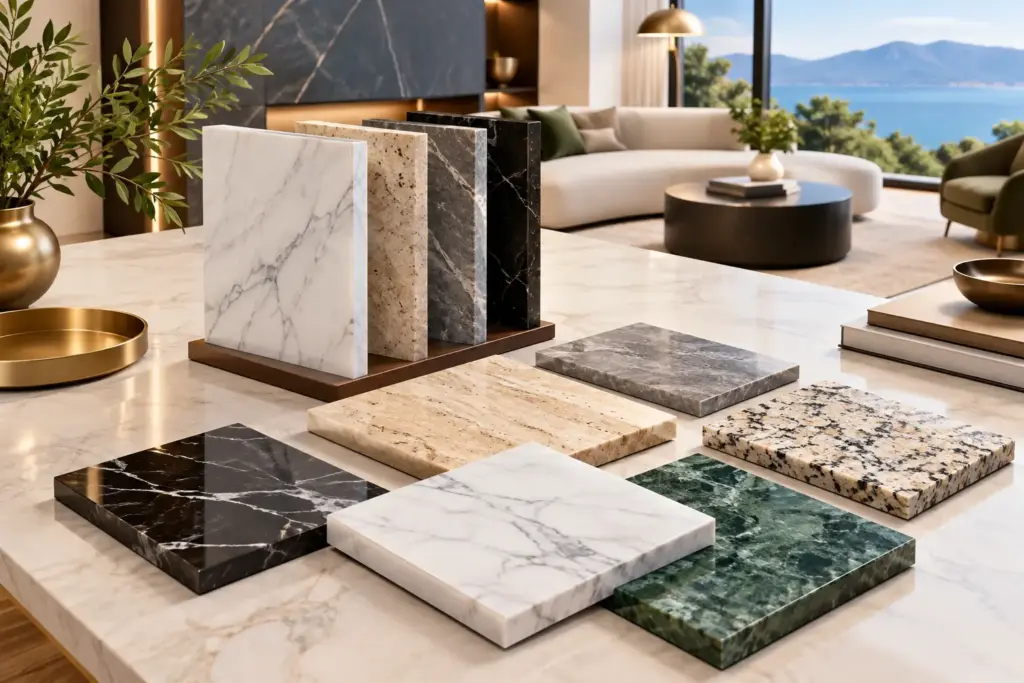
Lighting changes everything. Gold veining can appear warm and expressive in afternoon sun yet more restrained beneath cool task lighting. A white surface may read crisp beside charcoal cabinetry and creamy beside oak. Review full samples against cabinet finishes, flooring, paint, and metal selections whenever possible.
For substantial projects, inspecting the actual slabs adds another layer of confidence. It allows the designer or client to consider vein placement, bookmatching opportunities, and the relationship between the surface and the room’s primary sightlines.
Performance at the Kitchen Island and Beyond
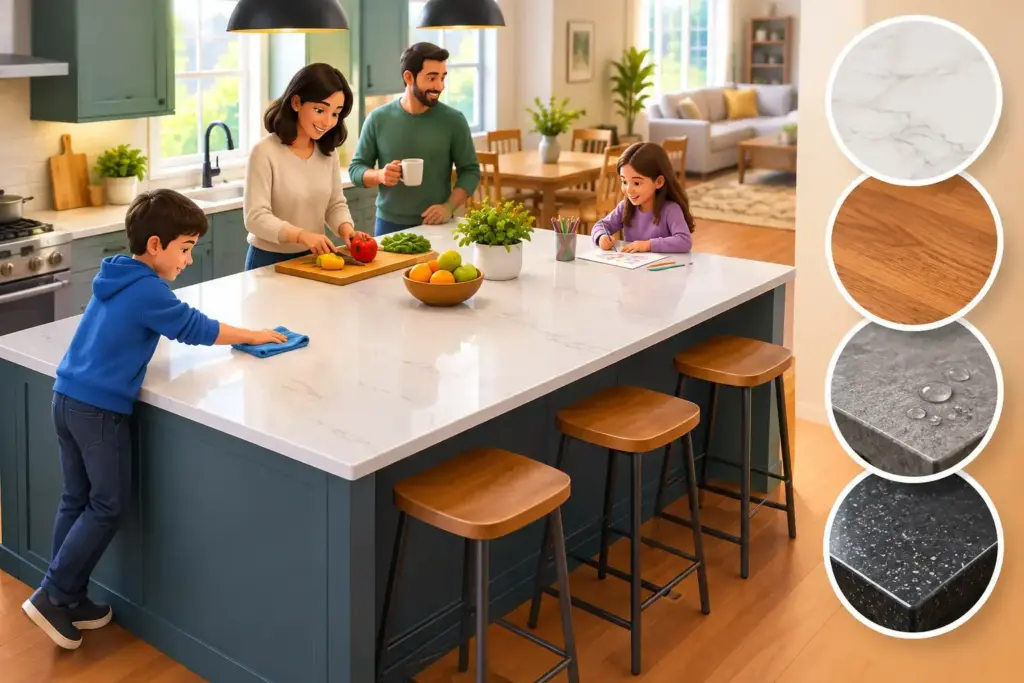
For a busy kitchen, both silica-free engineered stone and porcelain can be practical choices, but their strengths differ. Silica-free engineered surfaces generally offer a reassuring balance of durability, stain resistance, and a substantial benchtop feel. They are well suited to family kitchens, islands, butler’s pantries, vanities, and workplace kitchens where easy daily care matters.
Porcelain is especially valued for resistance to heat, UV exposure, and staining. These qualities can make it an excellent candidate for exterior kitchens, barbecue surrounds, facades, and sunny rooms where color stability matters. It is also popular for shower walls and bathroom applications because large panels can reduce the number of grout lines.
That does not mean porcelain is indestructible. While its surface is highly resistant to scratching and heat, its edges and corners can be vulnerable to sharp impact, particularly during handling and installation. A heavy object dropped onto a projecting edge may chip it. Detailed templates, suitable support, and a skilled installer are essential.
Silica-free engineered stone also needs sensible care. Use trivets for hot cookware unless the product’s specific guidance confirms otherwise, avoid cutting directly on the surface, and clean spills with a mild, non-abrasive product. Acidic or strongly colored substances should not be left to sit unnecessarily. The goal is not high-maintenance living, but preserving the finish that made the slab appealing in the first place.
Fabrication and Installation Shape the Final Result
The most beautiful slab can disappoint if fabrication is treated as an afterthought. This is particularly true when comparing silica-free versus porcelain for detailed joinery.
Silica-free engineered slabs can often support the familiar design language of premium stonework: shaped edges, substantial miters, integrated drainers, and coordinated splashbacks. Exact possibilities depend on the product, thickness, layout, and fabricator’s recommendations. A large island also requires thoughtful support planning, especially where there are overhangs, cutouts, or waterfall ends.
Porcelain requires a different level of precision. Its slimness can be an advantage where weight, wall build-up, or contemporary minimalism is a priority. However, cutouts for sinks and cooktops, edge joins, transport, and installation need experienced handling. Not every fabricator works with porcelain at the same level, so confirm capability early, before the design is locked in.
For trade professionals, material availability matters as much as material selection. Confirm slab dimensions, batch continuity, lead times, and the quantity required for all elements, including splashbacks and returns. For homeowners, this preparation reduces the risk of falling in love with a surface that cannot meet the project schedule or layout.
Where Each Material Tends to Shine
Silica-free engineered stone is often the natural fit for kitchens and interiors that call for a polished slab presence, dependable everyday performance, and controlled veining across multiple surfaces. It can feel quietly luxurious in a pale, layered interior or confidently dramatic in a black-and-brass scheme.
Porcelain is particularly persuasive where heat, sunlight, and slim-format versatility are leading priorities. Think alfresco counters, fireplace cladding, shower walls, vertical feature surfaces, and contemporary kitchens with a precise, minimal profile.
Budget can influence the decision, but it should be assessed as a whole-project figure. Slab price alone does not tell the full story. Thickness, fabrication complexity, waste from the layout, edge treatment, transport, installation access, and the number of cutouts all affect the final cost. A simple porcelain installation may be highly efficient, while a complex mitered porcelain island can require specialist labor. Similarly, a larger engineered slab may reduce joins and create a more resolved visual outcome, even if the initial material cost is higher.
Make the Decision With the Finished Space in Mind
Rather than asking which material is universally better, begin with the room’s non-negotiables. Is the island intended to feel substantial and sculptural? Will the surface sit in direct sun or beside an outdoor grill? Does the project require a verified silica-free composition? Is the design dependent on a thin, crisp edge or generous veining that carries across a waterfall panel?
At Avila Stones, the most successful selections begin with those questions, followed by an in-person review of color, finish, slab scale, and project requirements. A considered surface choice does more than complete the joinery. It gives the space a lasting point of view, one that still feels intentional long after the final details are installed.
Ready to Choose Your Stone?
Our team can walk you through every silica-free and natural option in the range.