
Uncategorized
Luxury Stone Selection Guide for Refined Spaces
Our luxury stone selection guide helps you compare natural and engineered surfaces for kitchens, bathrooms, and statement interiors with clarity and care.
A stone surface is rarely a background decision. On a generous kitchen island, it becomes the visual anchor of the room. Across a vanity, it can make a compact bathroom feel tailored and composed. This luxury stone selection guide is designed to help you choose a surface with the presence, performance, and supply confidence your project deserves.
The strongest selections begin with more than a color preference. They consider how the slab will read in changing light, how it will meet cabinetry and metal finishes, who will use the space, and whether the material can be supplied to the required standard and timeframe. A beautiful surface should also be the right one for the way a project is built and lived in.
Start With the Space, Not the Sample
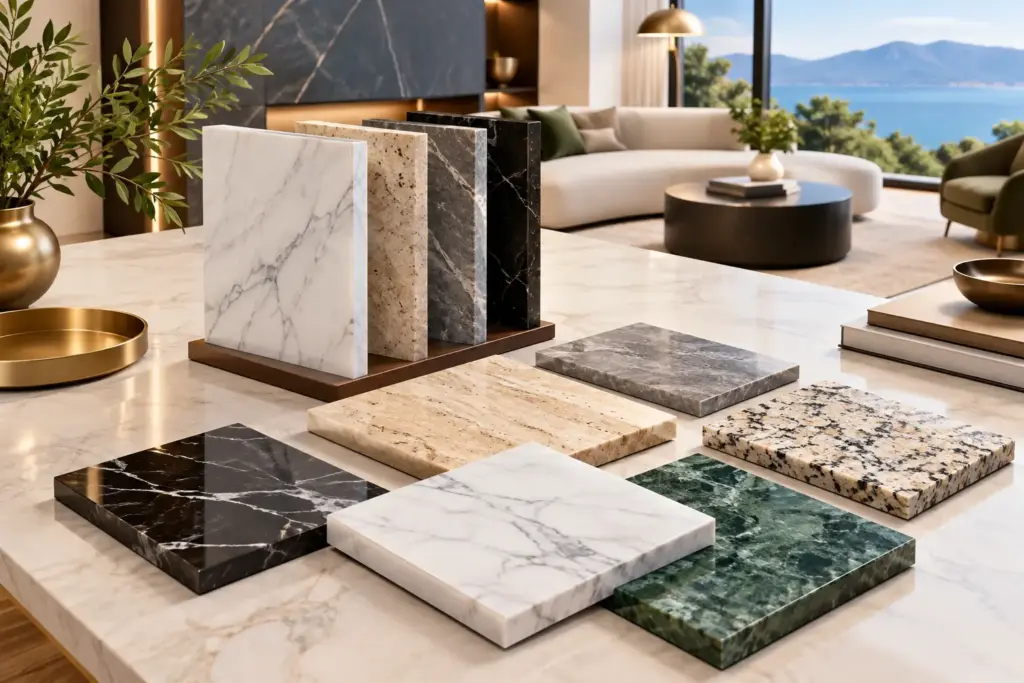
A small sample is useful, but it cannot fully communicate the movement of a full slab. Broad veining may look restrained in the hand and dramatically expressive across a 10-foot island. Fine, quiet patterning can create a calm, architectural foundation, while stronger contrast can give a room its defining point of view.
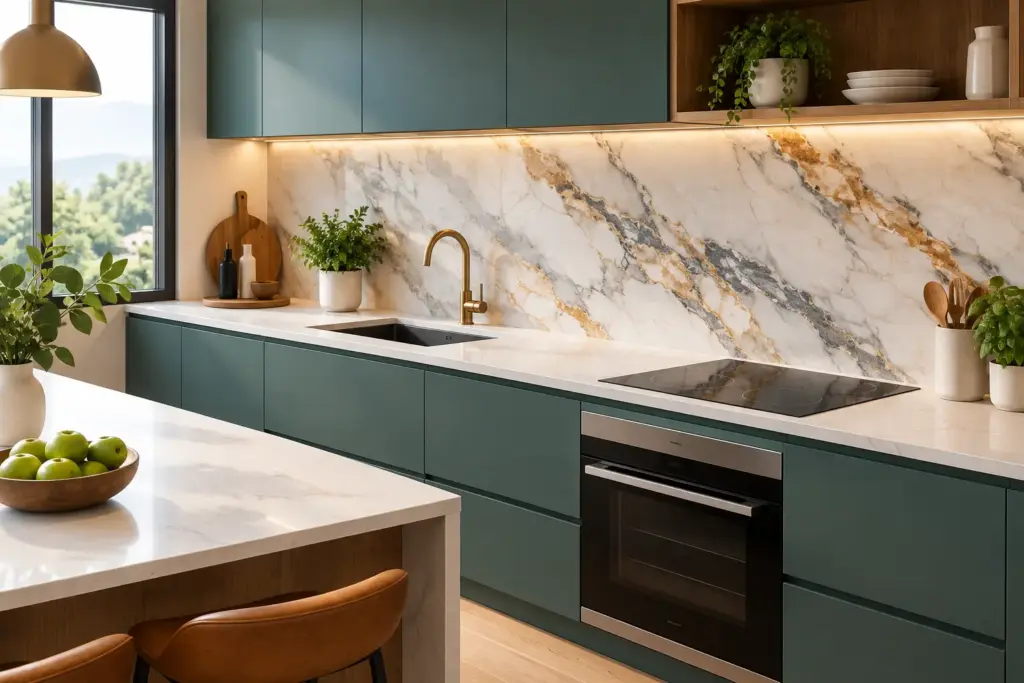
Begin by identifying the role stone will play. In a kitchen with warm oak cabinetry, brushed brass, and soft plaster walls, a surface with creamy ground tones and gold veining can carry the palette with confidence. Santorini Gold, Royal Gold, and Statuario Oro suit this direction when the intention is warmth with a polished finish. For sharper contemporary spaces, Black Oro offers depth and contrast, especially against pale timber, fluted joinery, or restrained matte black details.
In bathrooms, consider the stone as part of a closer, more intimate experience. It will be seen beside mirrors, fittings, tile, and soft lighting. A gentle surface such as Bianco Seta can bring refinement without making a smaller room feel busy. In larger ensuites or hospitality settings, a more expressive slab may be appropriate, provided the surrounding finishes give it room to lead.
Luxury Stone Selection Guide: Natural or Engineered?
The central material decision is often between natural stone and engineered stone. Neither is automatically superior. The right choice depends on the visual character you want, the level of variation you welcome, the demands of the application, and your maintenance expectations.
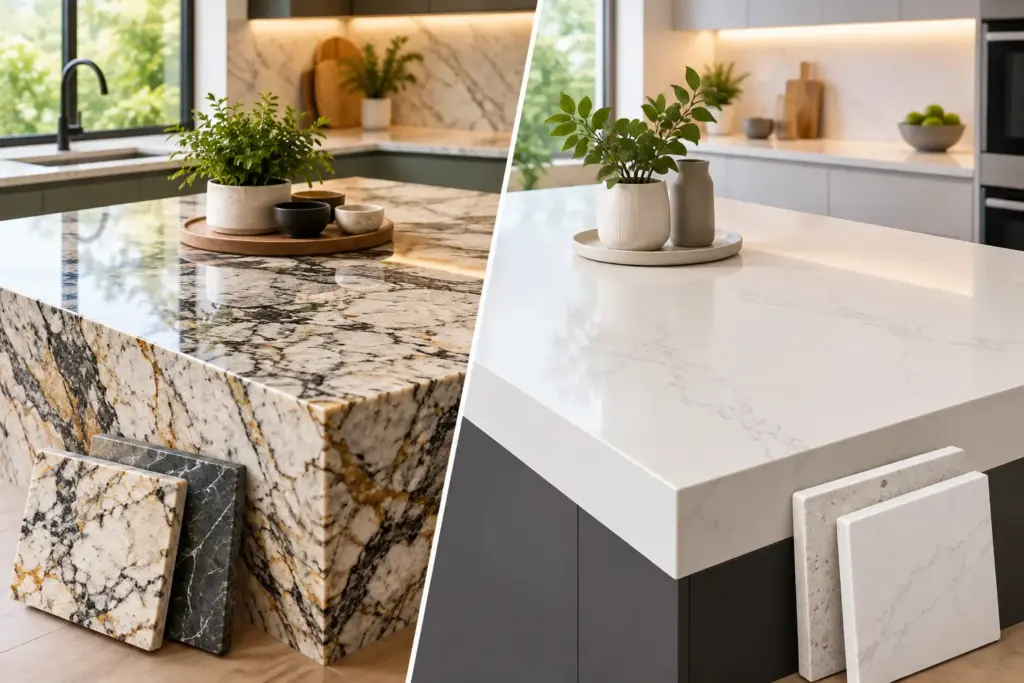
Natural stone has an inherent individuality that cannot be replicated. Its mineral shifts, veining, and tonal variations tell a geological story, making each slab distinct. Taj Legacy, for example, can bring a layered, organic quality to a kitchen, fireplace surround, or feature wall. For clients who value one-of-one material expression, this variation is part of the appeal, not a compromise.
That individuality calls for a more considered selection process. Natural stone should be inspected at slab level, particularly where multiple pieces will be joined or where a prominent vein needs to flow across an island, backsplash, or wall. Depending on the stone and finish, sealing and ongoing care may also be part of ownership.
Engineered stone provides a more controlled visual language. It is often selected for its consistency, durability, and lower-maintenance profile, particularly in active kitchens, multi-unit developments, and commercial interiors. Polar Calacatta delivers a crisp white base with confident marble-inspired movement, while Desert Bloom offers warmer, more grounded color for spaces that need softness without losing definition.
For projects prioritizing safer material pathways, a silica-free engineered stone range adds another important consideration. This is especially relevant for builders, fabricators, and homeowners who want to align surface selection with responsible specification and workplace safety expectations. Confirm the exact product composition, fabrication requirements, and suitability for the intended application before finalizing any selection.
Read the Slab in Real Light
Showroom lighting is valuable, but it is not the only light that matters. A stone with warm undertones can become more golden in afternoon sun, while cool gray veining may appear sharper under LEDs. Take samples into the project where possible and place them next to cabinetry, flooring, paint, and hardware.
Look at the sample in the morning, at dusk, and under the lighting planned for the finished room. This is particularly important with white-based surfaces. One white may lean clean and bright, another may carry cream, gray, or taupe beneath the surface. Those undertones determine whether the room feels cohesive or slightly at odds.
For large installations, ask to view the actual slab before fabrication. Inspect the face, edges, and any natural characteristics that may become visible after cutting. This is not simply a quality-control step. It is how you decide where the most compelling movement should sit and where quieter areas may best serve sink cutouts, seams, or splashbacks.
Match Performance to Daily Use
Luxury is felt in daily use, not only on installation day. A family kitchen, an outdoor entertaining area, and a polished reception desk each place different demands on their surfaces.
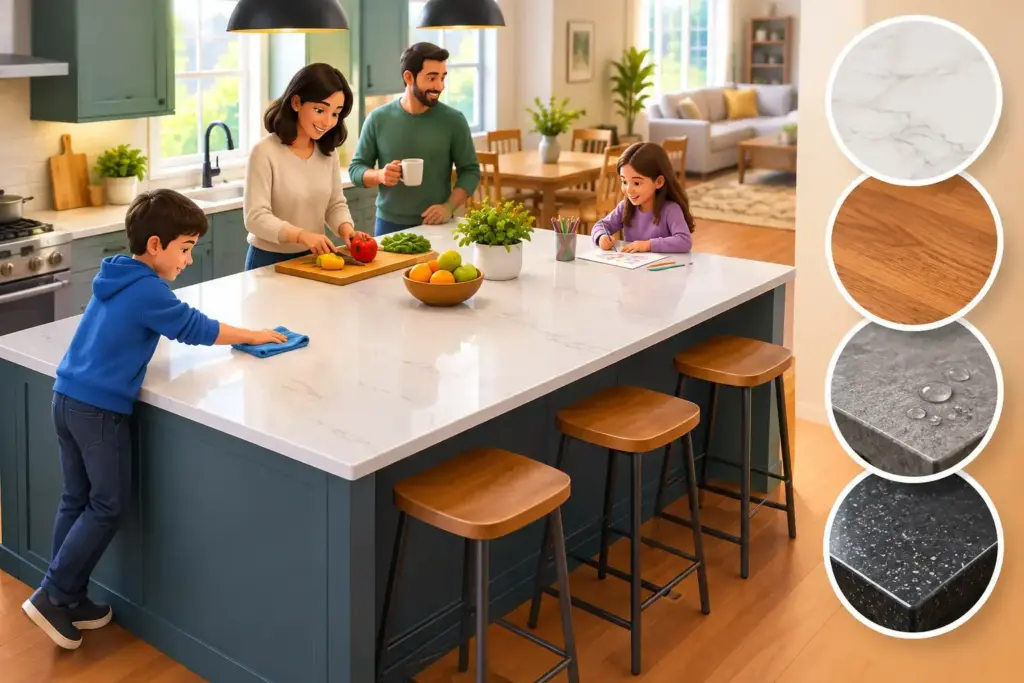
In kitchens, think about heat exposure, food preparation, cleaning habits, and the chance of high-impact use around the island. In bathrooms, moisture, cosmetics, and cleaning products matter. Outdoor applications introduce sun, temperature changes, rain, and the need for a material suited to the local conditions and installation method.
The finish also shapes performance and appearance. A polished surface reflects light and emphasizes veining, making it an elegant choice for interiors where a more formal, luminous look is desired. Honed or matte finishes can feel softer and more contemporary, though they may show marks differently depending on the material and color. There is no universal best finish. The answer sits in the balance between visual intent and practical tolerance.
Discuss edge profiles and thickness early as well. A slim, clean edge can support a contemporary kitchen, while a built-up profile gives an island a more substantial, furniture-like presence. These decisions influence slab yield, fabrication complexity, and the final project budget.
Plan for Veins, Seams, and Scale
The difference between an adequate installation and a memorable one often comes down to layout. Vein direction should be discussed before cutting, not after the stone has arrived at the fabricator. On an island, bookmatching can create a striking mirrored effect, while vein matching from countertop to backsplash can make the whole composition feel intentional.
Seams are sometimes necessary on oversized benches, long walls, or layouts with challenging access. A well-planned seam can be discreet, particularly when it follows the material’s movement or falls away from the primary sightline. Trying to eliminate every seam at any cost is not always practical. A better goal is a layout that respects both the slab and the architecture.
Scale matters here. A dramatic pattern can be exceptional on a large island but overwhelming on every surface in an open-plan room. Consider whether the stone should be the room’s hero, or whether it should support other elements such as timber, textured tile, sculptural lighting, or a view beyond the glass.
Specify With Supply and Installation in Mind
For homeowners, the emotional side of selecting stone is often the most visible. For designers, builders, and developers, dependable supply is equally critical. A surface must be available in sufficient quantity, inspected for consistency, and delivered within the construction sequence. This becomes especially important when matching slabs across multiple kitchens, bathrooms, apartments, or commercial zones.
Before committing, confirm the number of slabs required, the usable dimensions after fabrication allowances, lead times, and whether reserve material is advisable. A project-specific quote should account for the selected slab, finish, thickness, fabrication complexity, delivery requirements, and any special handling. Direct sourcing and slab-level inspection help create greater clarity around both quality and value.
At Avila Stones, the selection process is supported by curated samples, showroom viewing, and project guidance for residential and commercial specifications. For a statement surface, seeing the full material in person remains one of the most valuable steps you can take.
Let the Stone Set the Tone
The most enduring stone choices do not chase a passing trend. They establish a mood that still feels right after the styling has changed, the room has settled, and the surface has become part of everyday rituals. Choose the slab that makes the space feel more resolved, then give it the careful layout, fabrication, and lighting it needs to show its full character.
Ready to Choose Your Stone?
Our team can walk you through every silica-free and natural option in the range.