
Uncategorized
Best Surfaces for Busy Kitchens That Last
Compare the best surfaces for busy kitchens, from low-maintenance engineered stone to character-rich natural stone, with practical selection advice today.
A kitchen can look pristine at 9 a.m. and host school lunches, hot pans, grocery bags, and a full dinner service by nightfall. The best surfaces for busy kitchens are not simply the hardest or the most dramatic. They are the materials that suit the way you cook, entertain, clean, and live, while still giving the room a considered architectural presence.
For a premium renovation or new build, the benchtop often sets the visual temperature of the whole space. It is the plane that catches morning light, frames the joinery, and turns an island into a genuine gathering place. Choosing well means balancing beauty with practical expectations from the outset.
What a Busy Kitchen Surface Really Needs
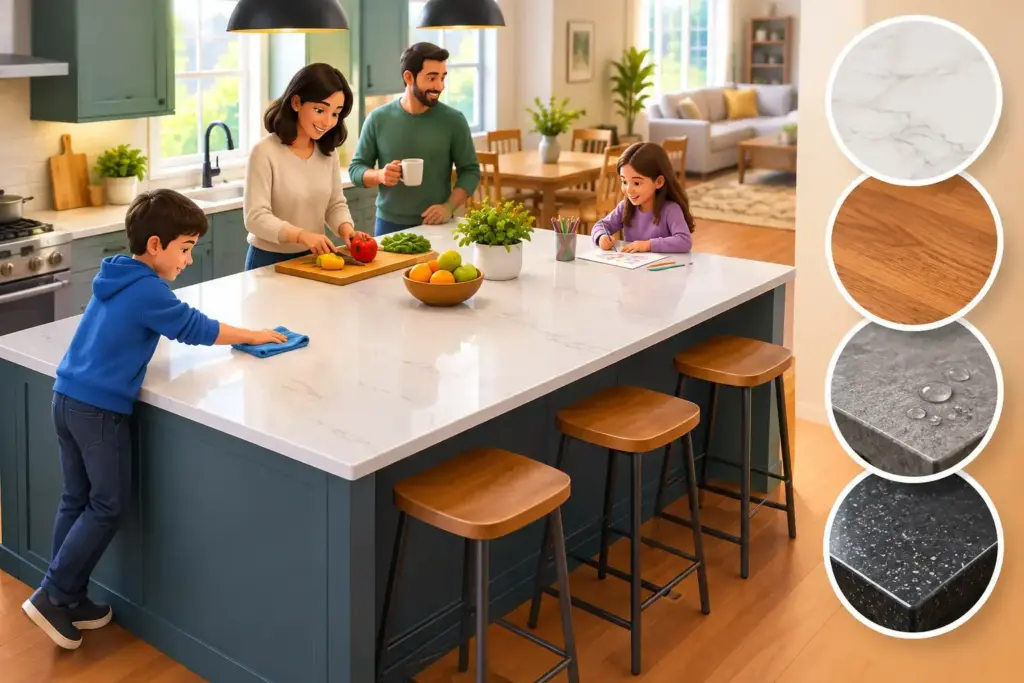
A high-use kitchen puts a surface through more than occasional wear. It needs to cope with spills, food preparation, repeated wiping, and the small impacts of everyday family life. Heat resistance, stain resistance, scratch resistance, edge detailing, and maintenance all matter, but they do not carry equal weight for every household.
A family that cooks every evening may prioritize an easy-clean, consistent engineered surface. A homeowner building a quieter, highly tailored kitchen may accept a little more care in exchange for the depth and individuality of natural stone. For a designer or builder, slab availability, yield, lead times, fabrication requirements, and visual consistency across a large island and perimeter runs are equally central to the decision.
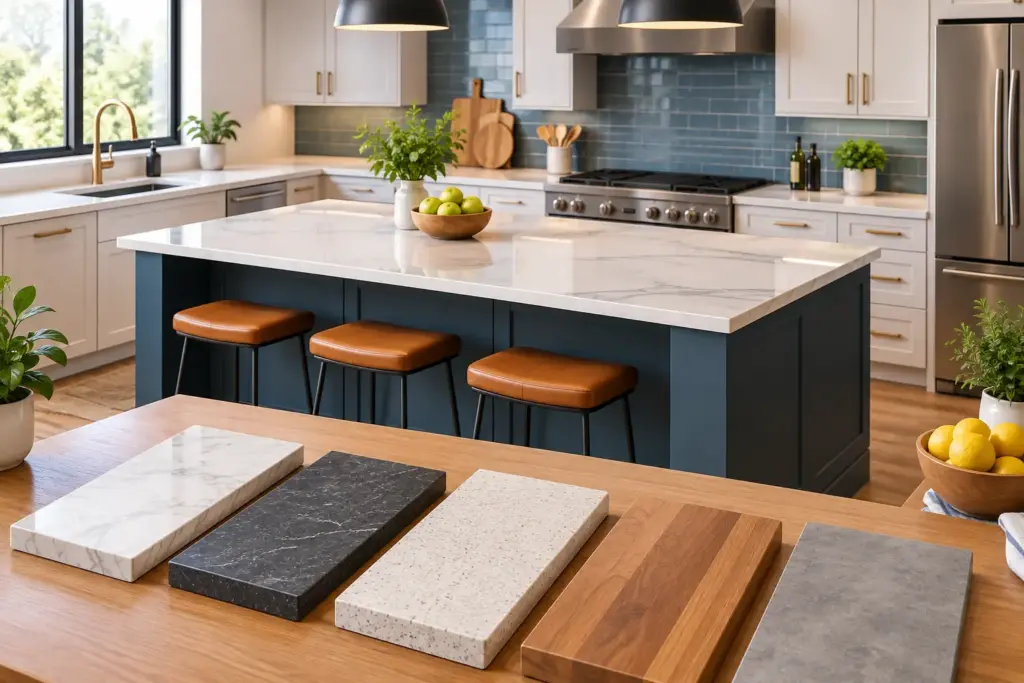
The right material should also work with the kitchen’s light. A softly veined white surface can bring lift to darker cabinetry, while a deep charcoal or black slab can ground pale oak and brushed metal finishes. This is why viewing a full slab, rather than selecting from a small swatch alone, makes such a difference.
Engineered Stone for Low-Maintenance Luxury
For many active households, engineered stone is among the best surfaces for busy kitchens because it pairs refined visual impact with a more predictable maintenance routine. Its non-porous composition generally makes everyday cleaning straightforward and helps reduce anxiety around common food and drink spills.
Engineered surfaces are particularly effective when the brief calls for a controlled, repeatable look. A white marble-inspired design can deliver sweeping movement across a large island without relying on the natural variation of a quarried block. This consistency can be valuable in open-plan homes, apartment developments, and commercial spaces where several kitchens need to read as one considered collection.
Designs with fine gray or warm gold veining can bring an elevated feel without overwhelming a room. A surface such as Polar Calacatta or Statuario Oro can sit comfortably with crisp white joinery, while Santorini Gold, Royal Gold, and Bianco Seta offer warmth that responds beautifully to timber, brass, and soft neutral palettes. For a bolder kitchen, Black Oro creates a more graphic foundation, especially when paired with integrated dark cabinetry or sculptural lighting.
That said, “low maintenance” does not mean indestructible. Use trivets for very hot cookware, avoid harsh chemical cleaners, and use a chopping board rather than cutting directly on the surface. Good habits protect the finish and preserve the sharp, polished appearance that makes an engineered slab so compelling.
Consider silica-free engineered options
Safety and compliance have become a meaningful part of material selection in Australia. A silica-free stone range gives homeowners, builders, and fabricators another pathway when specifying an engineered look, with worker and homeowner considerations built into the brief. It is still essential to confirm the product’s specifications, fabrication process, installation requirements, and suitability for the intended application before final selection.
For projects that need a dependable, polished surface with visual consistency and daily ease, this category deserves close consideration.
Natural Stone for Depth, Character, and Individuality
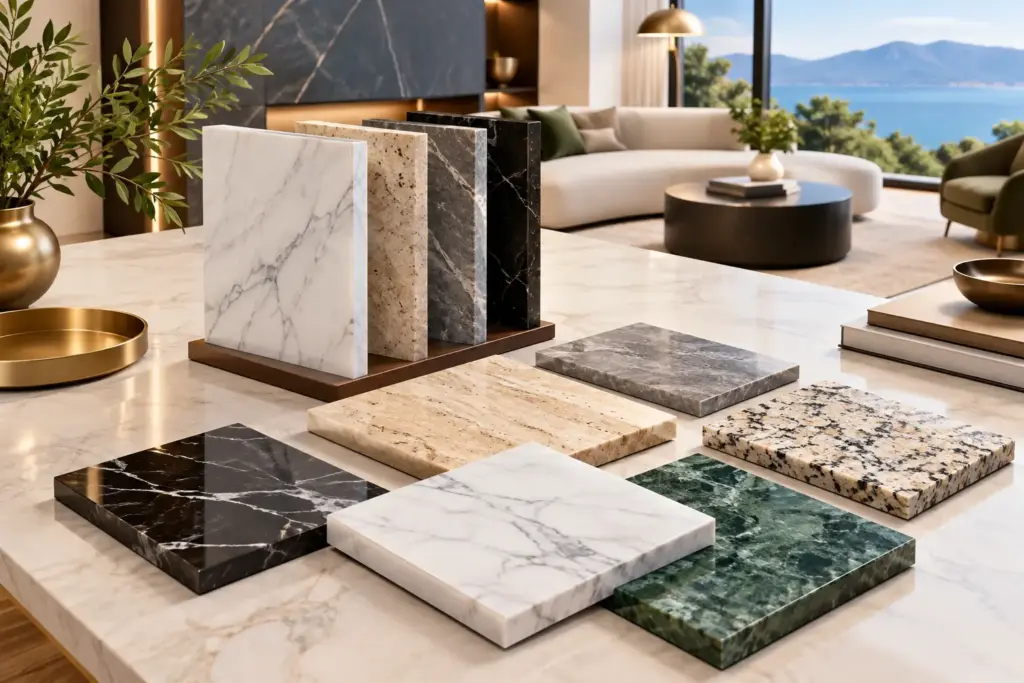
Natural stone offers something manufactured surfaces cannot replicate exactly: geological variation. Veins may shift from quiet to expressive, colors can soften or deepen across a slab, and fine mineral details reveal themselves differently throughout the day. In a luxury kitchen, this movement can make an island feel less like a countertop and more like a focal piece of architecture.
Taj Legacy, for example, suits interiors that call for warmth, gentle complexity, and a more organic visual rhythm. It can complement timber cabinetry, plaster finishes, and layered neutral schemes with a sense of permanence. Every slab should be selected for its individual character, including the placement of veins, tonal changes, and any natural features that will become part of the finished design.
Natural stone asks for a more intentional ownership approach. Depending on the stone and finish, sealing may be recommended, acidic spills should be cleaned promptly, and some materials can develop a patina through use. For many clients, that is not a drawback. It is part of the appeal. A stone surface that becomes subtly more personal over time can bring warmth to a kitchen that would otherwise feel overly polished.
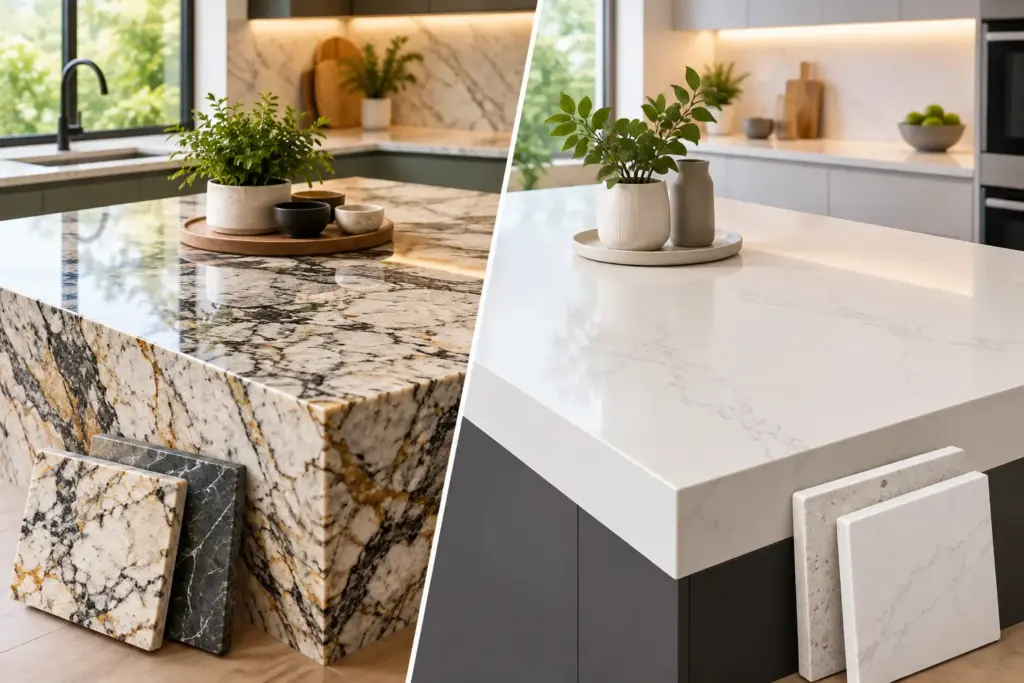
The trade-off is simple: if your priority is the most forgiving possible surface for young children, frequent red wine, or fast cleanups between meals, an engineered option may feel more comfortable. If you value one-of-a-kind veining and are happy to care for the material properly, natural stone offers exceptional visual reward.
Match the Finish to How You Use the Room
The finish of a slab changes both the look and the lived experience of a kitchen. A polished surface reflects light and can make a compact room feel brighter and more expansive. It enhances veining and delivers the crisp, high-end finish many clients associate with a contemporary stone kitchen.
A honed or matte finish is quieter and more tactile. It can suit warm minimalism, textural joinery, and kitchens designed to feel relaxed rather than glossy. However, the way marks, fingerprints, and spills show can vary significantly by material and color. A dark matte surface may look dramatic but require more attentive wiping in a high-traffic household.
Edge profiles deserve the same consideration. A simple eased edge has a clean, modern effect and is easy to integrate into most designs. A thicker mitred edge can create the impression of a substantial stone block, particularly on a feature island. More decorative profiles can work in classic interiors, but should be chosen with cleaning and day-to-day durability in mind.
Color Choices That Keep Working Hard
White and pale surfaces remain popular for good reason: they reflect light, open up compact kitchens, and create a crisp backdrop for almost any cabinet color. Fine veining adds movement without making crumbs or water marks overly obvious. A warm white with restrained gold or taupe detail can also prevent a new kitchen from feeling stark.
Mid-tone surfaces are often the quiet overachievers. Soft beige, greige, and muted stone shades conceal everyday marks more gracefully than very dark or very bright finishes while still feeling refined. Desert Bloom is an example of the kind of warmer, grounded direction that can connect a kitchen to timber floors and natural materials.
Dark slabs create immediate contrast and can make a large island feel purposeful and tailored. They are especially effective in generous rooms with good natural light. In a compact or dim kitchen, however, a dark surface may absorb light unless balanced with pale joinery, reflective accents, or well-planned task lighting.
Practical Details That Matter Before You Order
A beautiful slab needs the right planning behind it. Start by considering the actual layout: the size of the island, the location of joins, the sink and cooktop cutouts, splashback continuity, and whether the vein direction should run lengthwise or across the room. These decisions affect not only appearance, but slab yield and project cost.
For large islands, ask to view the full slab and discuss how the pattern will be placed. A dramatic vein that looks perfect on a sample can land awkwardly beside a sink cutout if it is not planned early. Builders and stonemasons should also confirm slab dimensions, thickness, support requirements, and fabrication timing before committing to final cabinetry dimensions.
Maintenance expectations should be equally candid. If a client wants the look of pale natural stone but prefers minimal upkeep, guide them toward an engineered design with a comparable palette. If they have fallen for a distinctive natural slab, make sure they understand its care requirements before installation day. The best result is a surface that feels right after the first dinner party and five years later.
Select With the Entire Kitchen in View
Stone is rarely chosen in isolation. Take cabinet samples, flooring, paint colors, hardware, and splashback options to the slab selection. Look at them together under natural light where possible, then consider how evening lighting will change the balance. A creamy slab can appear clean and luminous against warm oak, yet turn yellow beside a cooler white cabinet.
At Avila Stones, slab-level inspection and physical sample viewing support a more confident selection process, particularly where veining, tone, and project scale matter. For trade projects, clear discussions around availability and project-specific quantities help protect the design intent from concept through installation.
The most successful busy kitchen is not one that avoids every mark or asks nothing of its owners. It is one with a surface chosen honestly: beautiful enough to anchor the room, capable enough for daily life, and suited to the rituals that will happen around it.
Ready to Choose Your Stone?
Our team can walk you through every silica-free and natural option in the range.