
Uncategorized
Porcelain Versus Engineered Stone: Which Fits?
Porcelain versus engineered stone comes down to appearance, heat, upkeep, and installation. Compare premium surfaces for your project with clarity today.
A pale, veined kitchen island can set the entire mood of a home. It catches morning light, anchors timber cabinetry, and becomes the surface where daily life gathers. Yet when the look calls for refined stone movement, the choice between porcelain versus engineered stone is rarely only aesthetic. Heat exposure, edge detailing, slab size, maintenance expectations, and fabrication requirements all shape the right decision.
For homeowners, designers, and trade professionals, the best material is the one that performs beautifully in its intended setting while supporting the visual direction of the project. Porcelain and engineered stone can both deliver a polished, high-end result, but they do so in distinctly different ways.
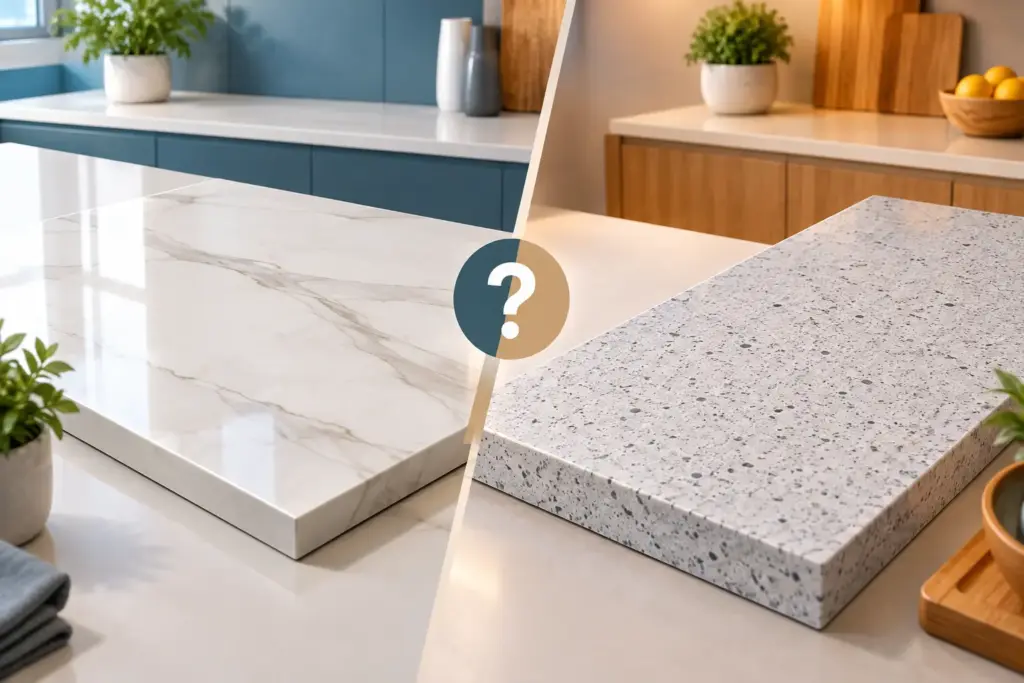
Porcelain versus engineered stone at a glance
Porcelain is a ceramic surface made from refined natural materials, fired at extremely high temperatures. It is commonly supplied in large-format slabs and is prized for its hard-wearing surface, resistance to heat, and ability to reproduce the look of marble, limestone, concrete, metal, or timber with impressive clarity.
Engineered stone is a manufactured slab designed for consistency, durability, and considered visual impact. Depending on the product, it may be made with quartz or alternative mineral blends and resins. Contemporary engineered collections can offer dramatic veining, crisp white grounds, deep dark bases, and a level of pattern continuity that can be difficult to source in natural materials.
The distinction is practical as much as visual. Porcelain is generally thinner and more rigid, while engineered stone is often thicker, heavier, and more forgiving for certain kitchen and bathroom applications. Neither is automatically superior. The question is what the space asks of the surface.
When porcelain makes the stronger choice
Porcelain earns its place in projects where heat, UV exposure, and a low-porosity finish matter most. Because it is fired at high temperatures, it has excellent resistance to heat. That makes it particularly compelling for fireplace surrounds, splashbacks, and outdoor entertaining areas where a surface may be exposed to sun, warm cookware, or changing weather.
Its resistance to fading is another advantage outdoors. A porcelain table, outdoor kitchen surface, or wall cladding can retain its color and pattern well in bright conditions, provided the chosen slab and installation system are specified for exterior use. For a poolside area or alfresco kitchen, this performance can be as valuable as the look itself.
Porcelain can also create a finely tailored aesthetic. Its slimmer profile suits contemporary detailing, including sleek wall applications, furniture cladding, and minimal shadow lines. Marble-look porcelain allows a project to bring expressive veining into areas where a natural stone surface may require more protection.
There are limits to consider. Porcelain is highly dense but can be more challenging to fabricate and transport because its thinner slab profile is less forgiving at unsupported points and cutouts. Edge treatments are also more restricted than they are with thicker engineered slabs. A refined mitred edge can create visual depth, but it requires experienced workmanship and careful handling.
Where engineered stone excels
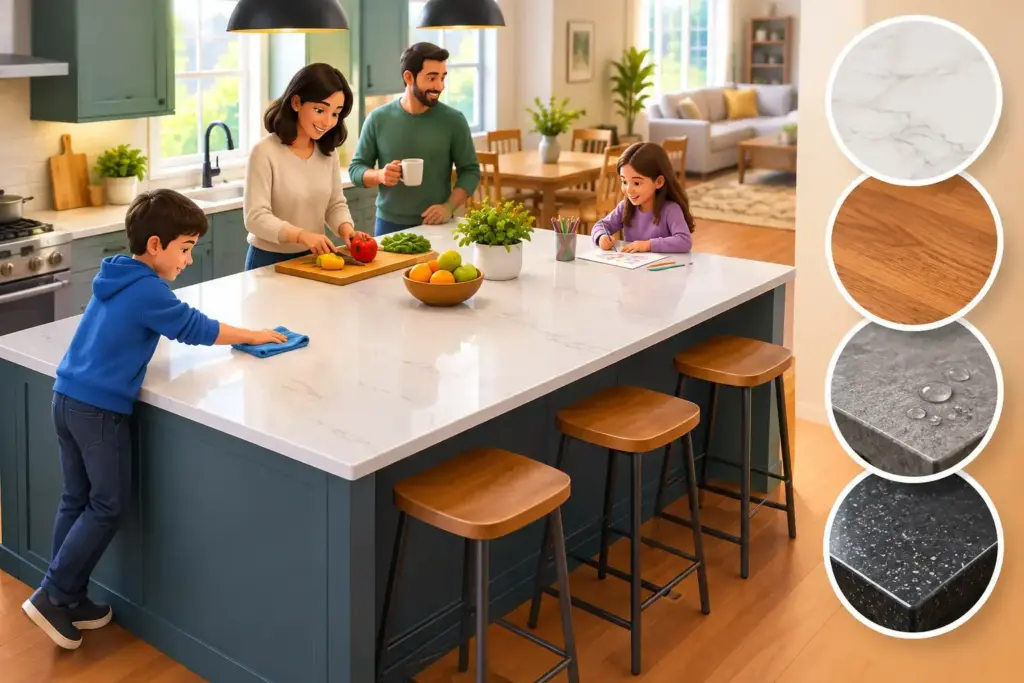
Engineered stone is a natural fit for many kitchens, bathrooms, and commercial interiors because it balances a luxurious finish with practical everyday performance. Its low-porosity surface generally resists stains well, making it a considered choice for busy households, hospitality spaces, and workplace kitchens.
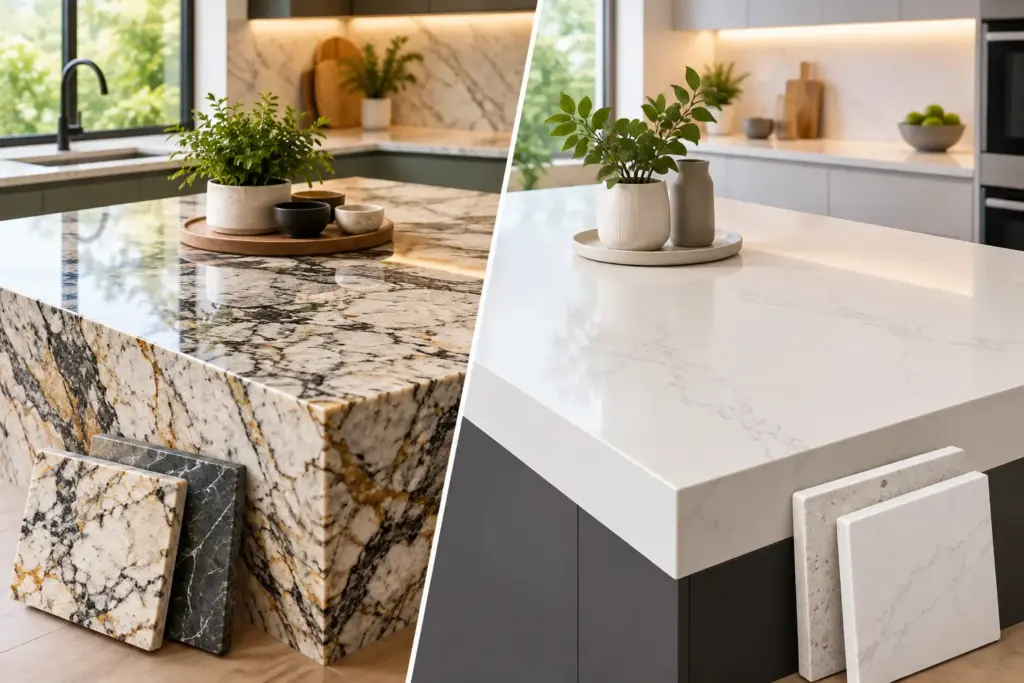
It is also a strong option when a project calls for substantial edge profiles or a visually solid island. A thicker-looking waterfall end, a generously proportioned countertop, or a detailed vanity can be easier to achieve with engineered stone. The material gives fabricators more opportunity to shape edges, create sink cutouts, and produce tailored joinery details that feel integrated with the overall design.
Design consistency is one of its clearest strengths. A collection such as Polar Calacatta or Statuario Oro can offer controlled white backgrounds and elegant gray or gold veining, allowing designers to coordinate multiple surfaces with confidence. For bolder interiors, Black Oro, Santorini Gold, or Desert Bloom can establish a more expressive focal point without relying on the availability of a single natural slab block.
This consistency is especially useful in multi-unit developments and commercial projects. When several kitchens, bathrooms, or reception counters require a coherent finish, engineered stone can support repeatability while still delivering a considered, premium appearance.
Appearance: natural movement or deliberate control?
The visual decision often comes down to the character you want the surface to bring into the room. Porcelain can reproduce the drama of natural marble, often with a broad range of finishes and patterns. It is an excellent choice when the design brief calls for a clean, architectural surface with a precise, contemporary feel.
Engineered stone offers its own form of design control. Rather than attempting to mimic every irregularity of a quarried slab, many premium engineered surfaces are created to deliver balanced veining, tonal depth, and dependable slab-to-slab continuity. The result can be restrained and luminous or dark and sculptural, depending on the collection.
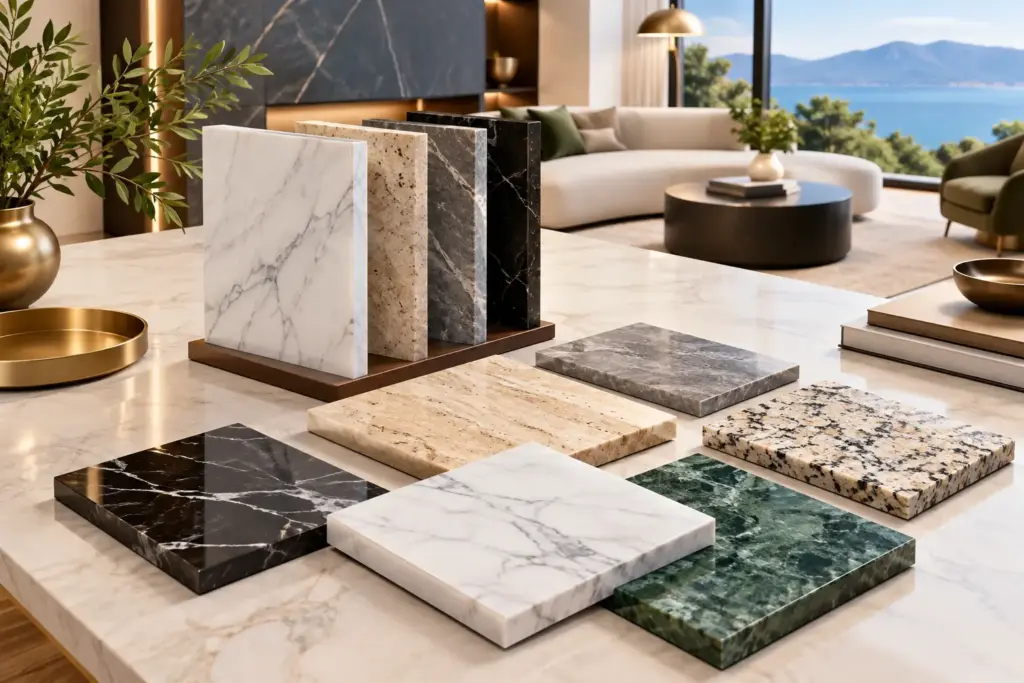
Always view the full slab where possible. A small sample is useful for comparing undertones against cabinetry and flooring, but it cannot show how veining travels across an island, wraps down a waterfall panel, or reads in the changing light of a room. This is particularly relevant for designs with bold movement, where slab layout can make the difference between an attractive surface and a memorable one.
Heat, stains, scratches, and everyday use
Porcelain generally has the edge for direct heat resistance. Even so, practical care remains wise. Avoid sudden thermal shock, and follow the fabricator’s guidance around cookware, support, and installation details.
Engineered stone is durable for daily countertop use, but it is not a surface to treat casually with extreme heat. Hot pans should be placed on trivets rather than directly onto the slab. This protects the finish and helps preserve the resin system used in many engineered products.
Both materials are easy to live with when cared for correctly. A soft cloth, warm water, and a pH-neutral cleaner will handle most everyday cleaning. Avoid harsh abrasives, aggressive chemicals, and cutting directly on either surface. Knives can damage the finish, while heavy impacts near edges and cutouts can cause chips in any slab material.
For bathrooms, both can perform exceptionally well. Their low-porosity qualities suit vanity tops, wall linings, and shower surrounds, although proper waterproofing, substrate preparation, and installation remain essential. The slab is only one part of a successful wet-area specification.
Fabrication, safety, and installation considerations
A premium surface should be selected with the people who will fabricate and install it in mind. Porcelain and engineered stone require different cutting methods, tooling, and handling practices. The installer should have direct experience with the exact material and application, especially for oversized islands, mitred edges, bookmatched panels, and exterior work.
For engineered stone, ask clear questions about composition and fabrication requirements. Crystalline silica content varies between products, and requirements can differ by jurisdiction. Silica-free engineered stone options offer an important pathway for projects that prioritize worker and homeowner safety, while maintaining the visual sophistication expected of a luxury surface.
This is not simply a compliance discussion. Choosing a product with transparent technical information, reliable supply, and appropriate fabrication support protects the project schedule as well as the finished result. For builders and designers managing multiple trades, that certainty matters.
Budget and value beyond the slab price
Comparing material prices alone can be misleading. Porcelain may require more specialized fabrication, additional handling, or particular support systems. Engineered stone can involve a higher material cost in some selections, but may offer more straightforward fabrication for standard countertop layouts.
The final budget should account for the slab, waste allowance, edge details, cutouts, installation, transport, and any special requirements for large-format panels. A waterfall island with prominent veining, for example, deserves a layout plan before fabrication begins. Paying attention to these details early prevents costly compromises later.
Value also comes from choosing a surface that will still feel right after years of use. A bright, softly veined engineered stone may bring enduring warmth to a family kitchen. A UV-stable porcelain surface may be the smarter investment for an outdoor bar exposed to long afternoons of sun.
How to make the final selection
Start with the application, then let the design refine the answer. For outdoor kitchens, fireplace surrounds, and highly sun-exposed areas, porcelain often deserves first consideration. For kitchen islands, vanity tops, substantial edge profiles, and coordinated interior schemes, engineered stone may provide greater flexibility and visual consistency.
Then consider the room as a whole. Hold samples beside cabinet finishes, paint, flooring, metalwork, and tile. Look at them in daylight and under evening lighting. Warm white stone can turn creamy beside cool cabinetry, while a gold vein may either elevate brass hardware or compete with it.
At Avila Stones, slab-level selection and project guidance help bring these decisions into focus. The right surface should feel resolved not only in a sample box, but across the full scale of the finished room.
A beautiful surface is never just a background material. Choose the one that meets the demands of the space, supports the craftsmanship of the installation, and gives the design a presence worth coming home to.
Ready to Choose Your Stone?
Our team can walk you through every silica-free and natural option in the range.